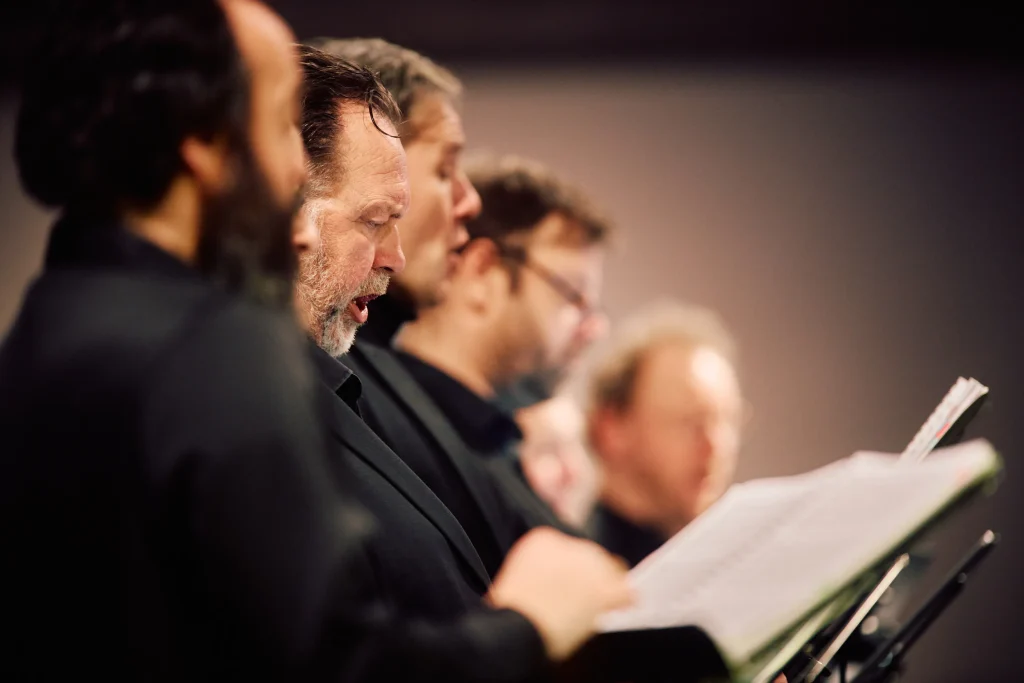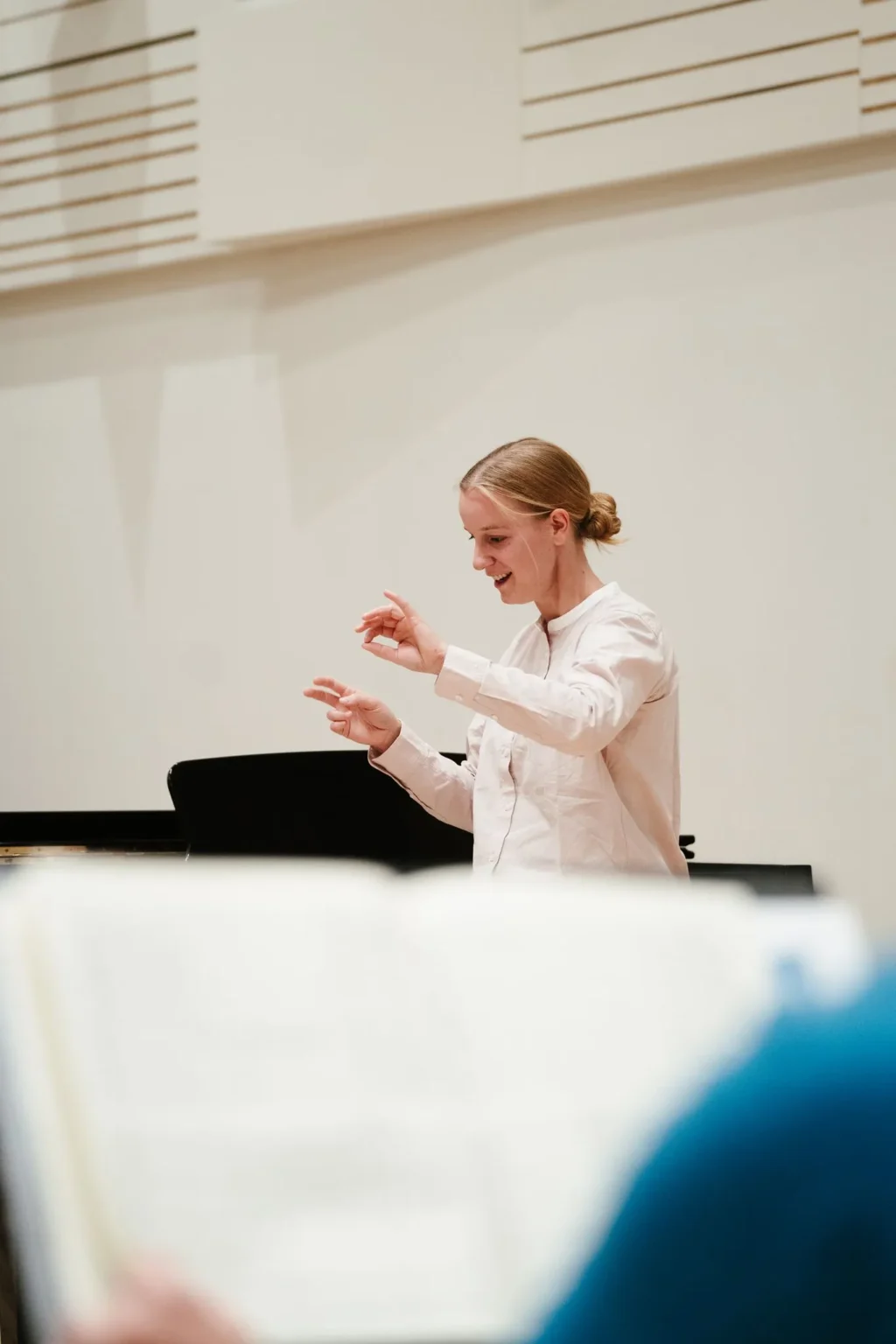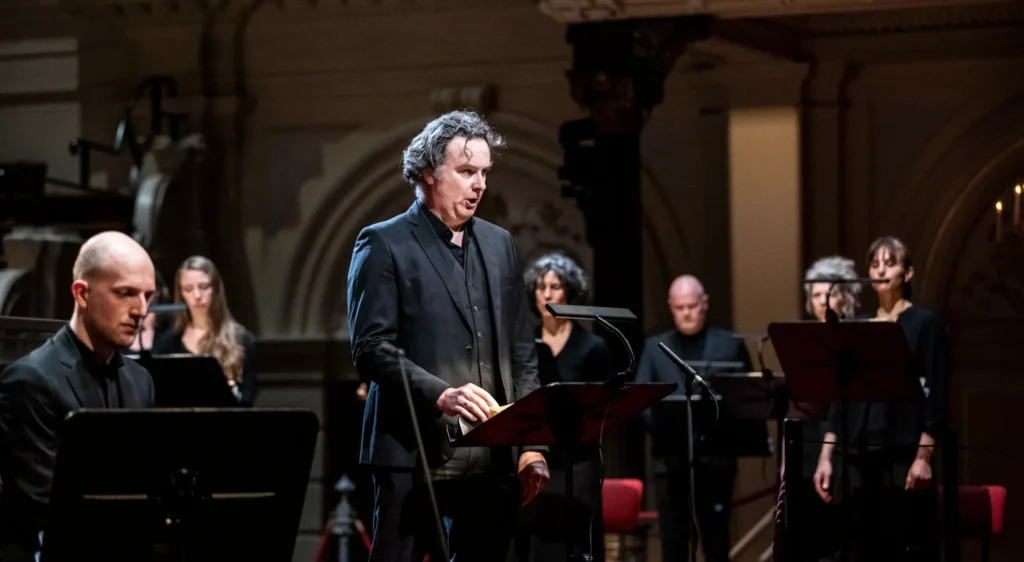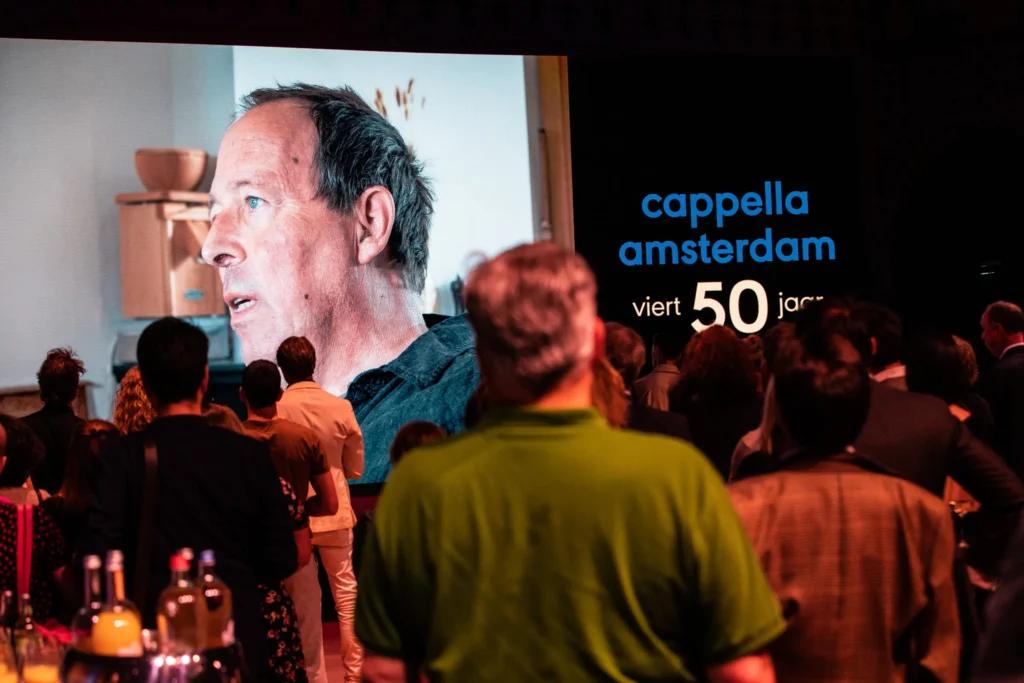
Writer, composer, musicologist: that’s the shortest summary Elmer Schönberger (Utrecht, 1950) tends to give of himself, though the order changes regularly. Schönberger is one of the most versatile figures in the Dutch music world. For decades he wrote authoritative music criticism, he has published novels and plays, and he composes music that is as much at home on the concert stage as in the theatre. For Cappella Amsterdam he wrote the new choral work De opstijging (The Ascent), which will have its world premiere on 12 November 2026 during the concert series Polderklanken.
From critic to composer
Schönberger studied piano at the Royal Conservatoire in The Hague and musicology at Utrecht University. As a student he wrote his first reviews for the Utrechts Nieuwsblad, and at the suggestion of his theory teacher Herman Strategier he composed his first “official” work in 1971, Chasse à l’enfant, for an international choir festival. Schönberger later took private composition lessons with Rudolf Escher, another Dutch composer whose music can be heard during Polderklanken.
Critic with a voice of his own
From 1982 to 2004, Schönberger wrote the acclaimed column Het Gebroken Oor (The Broken Ear) for the weekly Vrij Nederland: an essayistic “diary of a listener” in which he examined modern music and modern ways of listening. In 1990 he received the Pierre Bayle Prize for his music criticism. Together with composer Louis Andriessen he wrote Het apollinisch uurwerk (The Apollonian Clockwork), a standard work on Igor Stravinsky that has been translated into English, Russian and Italian. As artistic adviser to the Schönberg Ensemble and programmer for the Holland Festival, he also introduced composers such as Sofia Gubaidulina to Dutch audiences.
A composer between playfulness and seriousness
As a composer, Schönberger first made his name mainly in the theatre, with works such as the music theatre piece Verhuisbericht (Change of Address, 1983). From the late 1990s onward, his focus shifted to the concert stage. Among his most personal works he counts the choral pieces A questo punto and De opstijging (his most recent work), the music theatre piece La fuga del tempo, the Giacometti cycle Achttien dagen (Eighteen Days) and the piano concerto Ghosting Pantaleon. His music is characterised by a blend of playfulness, irony and intellectual sharpness, combined with a keen ear for text and context: the same qualities you find in his writing.
Also a novelist and playwright
Alongside music, Schönberger writes fiction. In 1999 he made his debut as a playwright with Kwartetten (Quartets), performed by four actors and a string quartet. His debut novel, Vic, met name, followed in 2003. In 2022 he published his first biography, Inspiratie wantrouw ik ten zeerste (I Deeply Distrust Inspiration), about the life and work of composer Otto Ketting.
He is currently working on a new book, with the working title Terugluisteren (Listening Back), about what remains of a lifetime of professional listening. “I see myself first and foremost as a professional listener,” says Schönberger. “I’ve been writing about music in a structured way for more than thirty years. I ask myself: what exactly does that do, and what remains of it? Those are all things I’ll be writing about in my new book.”
Tot slot
From music critic with his own column in Vrij Nederland to composer of a new, narrative choral work: Elmer Schönberger keeps reinventing himself, without ever straying far from text, voice and listening. With De opstijging he adds a distinctly personal work to the Dutch choral repertoire, which will have its world premiere during Polderklanken with Cappella Amsterdam.
Want to hear his music? Check the Polderklanken concert dates and book your tickets. Stay up to date on new programmes and portraits of composers like Elmer Schönberger. Sign up for the newsletter.