From a bronze statuette for the best recording to a hard-fought title for young conductors: the classical music world has prizes that truly matter. For anyone who’s lost track: here’s an overview of four important choral prizes, what they involve, and why they deserve attention.
Edison Klassiek: the oldest music prize in the Netherlands
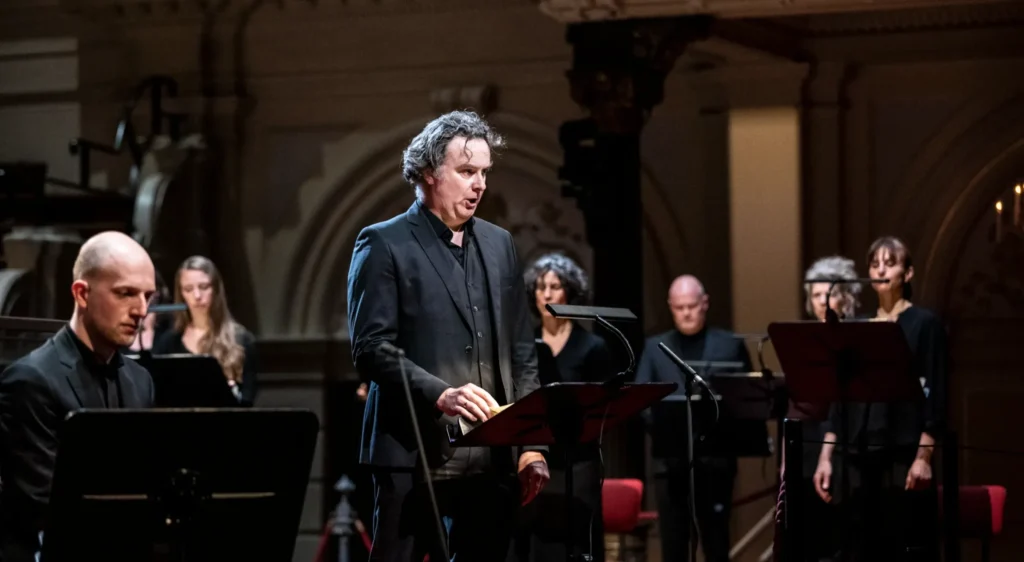
The Edison is the oldest music prize in the Netherlands and has been awarded since 1960. Comparable to the American Grammy Award, the Edison Klassiek honors the best classical recordings each year in categories such as orchestra, soloist, choir, early music, and lifetime achievement. The prize, a bronze statuette of Thomas Edison, is awarded by a professional jury; there is also a separate audience award for which listeners can vote themselves. An Edison Klassiek is considered an important seal of quality in the sector: it signals that a recording is not only technically but also artistically of a high standard. Cappella Amsterdam received this prestigious prize in 2012 for the album Janáček’s Choral Works and in 2017 for the album Kanon Pokajanen, featuring Arvo Pärt’s penitential canon. In 2024, the album Missa Sancti Georgii, featuring the work of Herman Finkers and performed by Cappella Amsterdam and Holland Baroque under the direction of Daniel Reuss, won the Edison Klassiek Audience Award.
Grammy Award: international recognition for classical recordings
The Grammy Award, presented by the American Recording Academy, is the world’s best-known music prize and has its own categories within the classical field, including Best Choral Performance. Unlike the Edison, the nomination process runs through Academy members who submit releases throughout the year, after which a specialized nominating committee selects the final candidates per category. For a Dutch chamber choir, a Grammy nomination is rare: Cappella Amsterdam received one in 2010, for the recording of Frank Martin’s Golgotha with the Estonian Philharmonic Chamber Choir under the direction of Daniel Reuss. A nomination alone brings international visibility that a Dutch prize cannot match, which explains why record labels and ensembles attach so much weight to it.
Eric Ericson Award: the World Cup for young choral conductors
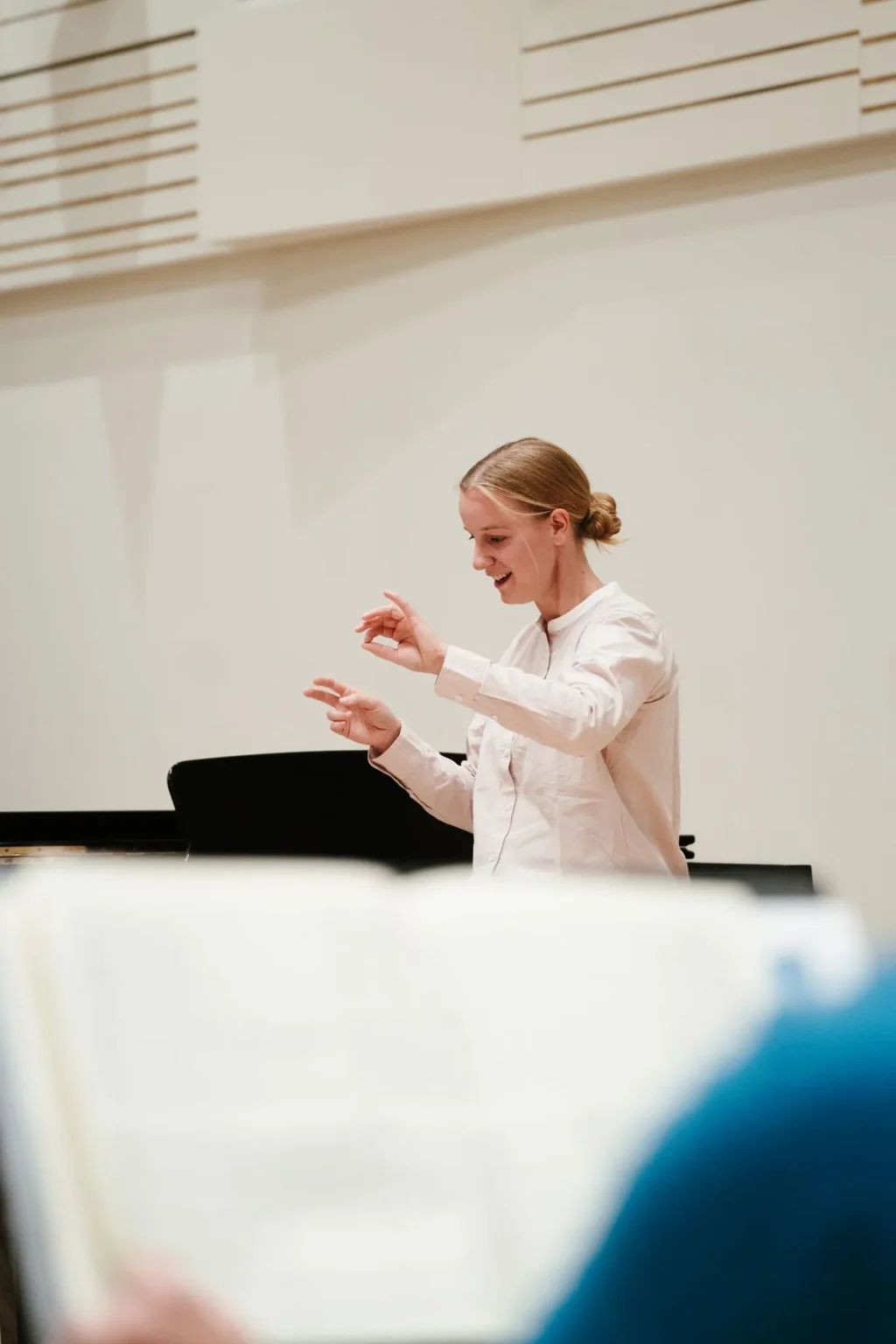
Named after the legendary Swedish conductor Eric Ericson, the Eric Ericson Award is considered one of the most prestigious international competitions for choral conductors under the age of 36. The competition is held once every three years in Stockholm, with dozens of participants from around the world. Candidates first conduct in private semifinals, after which the finalists get to lead the Swedish Radio Choir in a public closing concert. The winner receives not only prize money but, more valuably, the chance to serve as guest conductor with about ten leading European radio choirs over the following years. For a young conductor, this prize can accelerate a career significantly, as it did for Latvian conductor Krista Audere.
Kersjesprijs and Kersjes Directiebeurs: support for Dutch talent
The Kersjes Fonds, established in 1994 by conductor Anton Kersjes and his wife Margreet van de Groenekan, supports young Dutch musical talent with around 350,000 euros annually. The main prize, the Kersjesprijs, usually goes to an ensemble, often a string quartet, and is worth 50,000 euros. At least as relevant to the choral world is the annual Kersjes Directiebeurs: a 15,000-euro grant for a promising young Dutch conductor, intended for further training and career development. Several conductors who later made a name for themselves in the choral world received this grant early in their careers.
Why these prizes matter
Prizes like these do more than embellish a résumé. They provide visibility in a sector where attention is scarce, give young conductors access to networks, funding, and stages that would otherwise be hard to reach, and help listeners discover new recordings and artists. For a chamber choir, a prize is also a signal to funds and grant providers: confirmation of artistic quality by an independent professional jury.
Want to know which conductors and productions have brought Cappella Amsterdam recognition over the years? Check the concert calendar for upcoming performances, and listen to past productions on Spotify and YouTube.