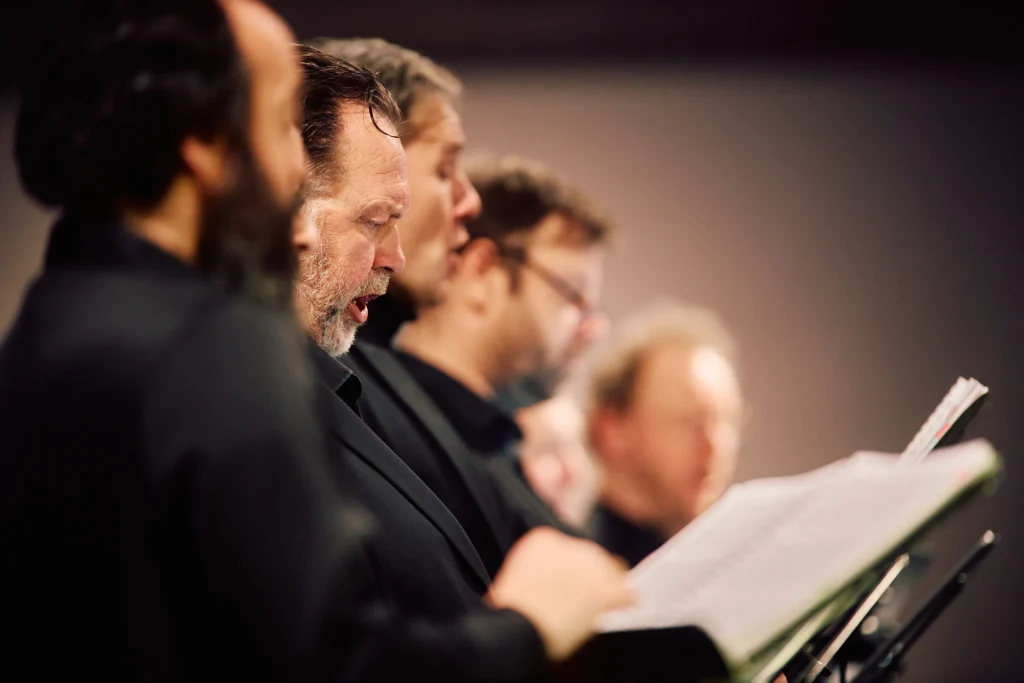
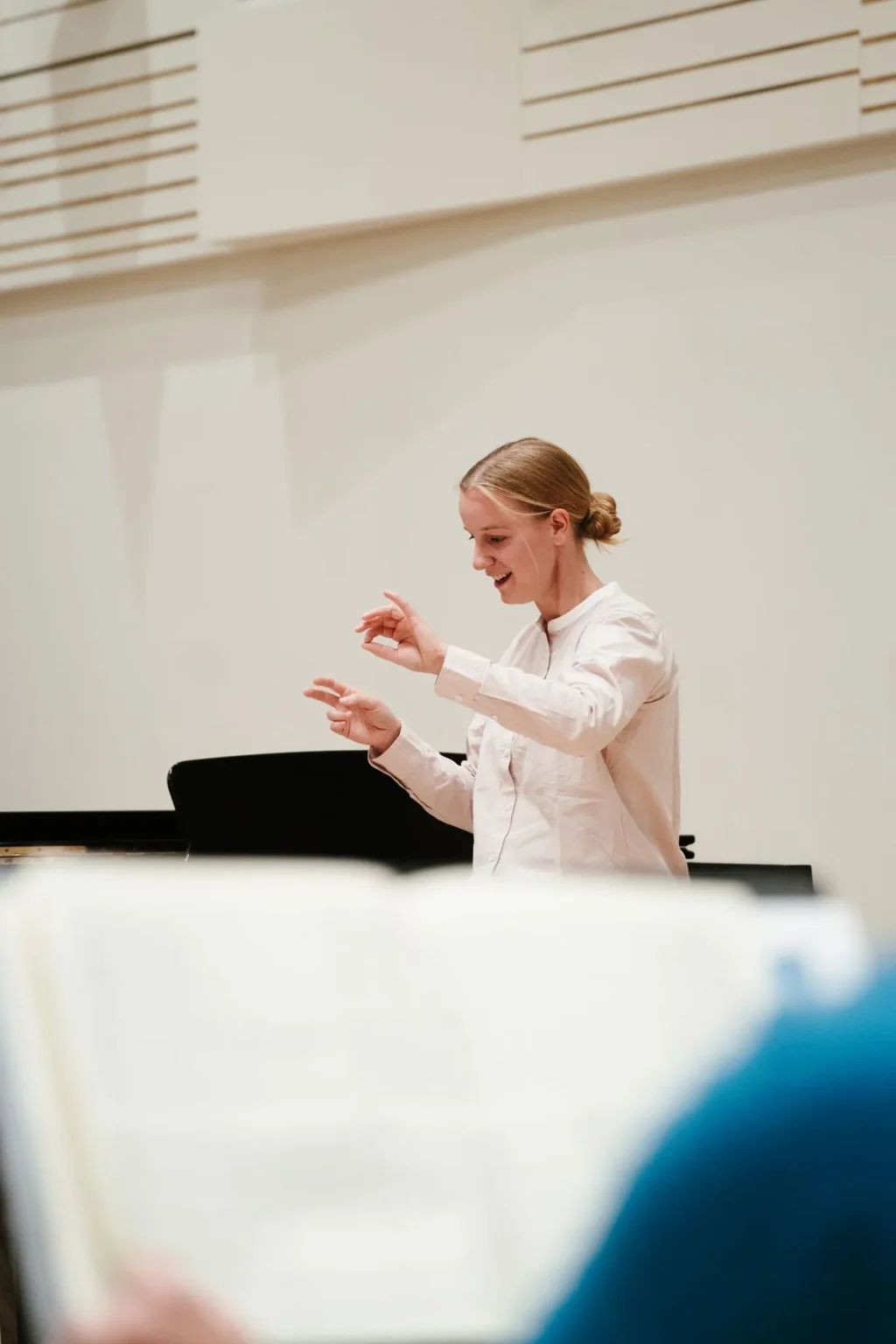
Polyphony is one of the fundamental concepts in classical music, yet it’s rarely explained well outside conservatory walls. What is polyphony, exactly, how does it sound, and why has it been one of the most cherished techniques in choral music for centuries? This guide will get you started, with examples from the repertoire you’ll also hear performed by Cappella Amsterdam.
Polyphony in one sentence
Polyphony literally means “many voices”: music in which several independent melodic lines sound simultaneously, each with its own rhythm and trajectory, together forming a unified whole. Unlike monophonic music, where everyone sings or plays the same melody, polyphony involves separate, independent lines that complement, cross, and sometimes contradict one another.
The difference with homophony
Many people confuse polyphony with homophony, and understandably so. In homophony, all voices move rhythmically together for the most part, as in a song with accompanying chords: one melody takes center stage while the rest provide support. In polyphony, there is no lead melody: every voice carries equal weight and its own rhythmic freedom. A canon, such as the well-known “Row, Row, Row Your Boat,” is a simple example: the same melody enters at staggered intervals in different voices, creating a polyphonic texture.
Where does polyphony come from?
Polyphony emerged in the Middle Ages, when composers began experimenting with adding extra voices to the Gregorian chants of the church. During the Renaissance, with composers such as Josquin des Prez, Palestrina, and the Dutch master Jan Pieterszoon Sweelinck, polyphony reached a peak of refinement: intricate motets and masses in which four, five, or more voices move independently through one another, yet still form a coherent whole. This tradition remains the foundation of much choral repertoire today.
Why polyphony is so difficult (and so beautiful) to sing
For singers, polyphony is a real challenge: you have to hold your own line steady while surrounded by other melodies moving in entirely different directions. That demands training, a trained ear, and trust between voice sections. At the same time, this is exactly what makes polyphony so captivating to listen to: rather than a single, flat melody, the listener hears a living texture of voices, each playing a slightly different role at every moment. In a well-performed polyphonic work, the music can almost seem to breathe.
Polyphony at Cappella Amsterdam
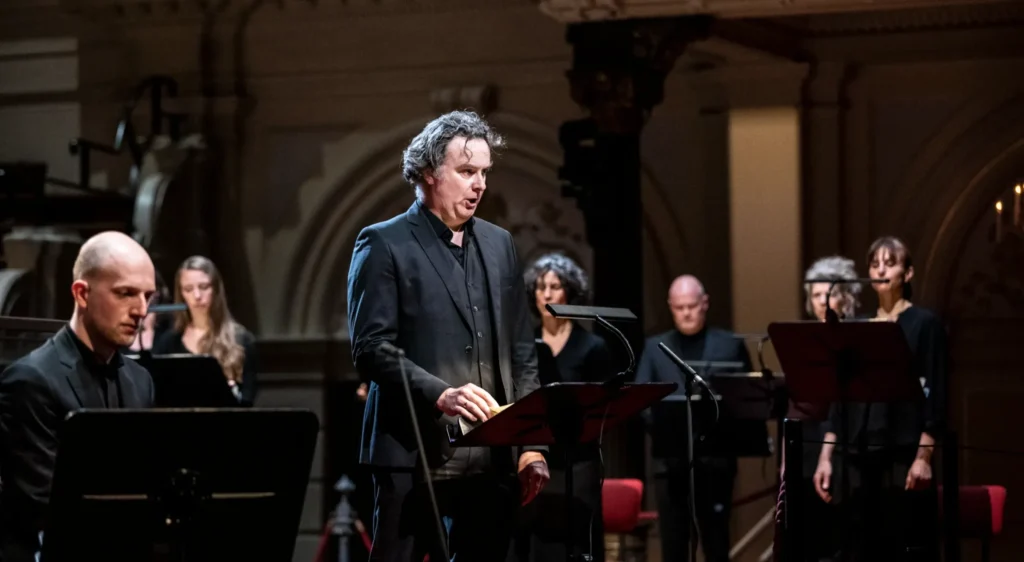
Polyphonic music forms the historical core of Cappella Amsterdam’s repertoire. The choir was founded in the 1970s with Sweelinck’s work as its artistic starting point, and continues to combine this today with polyphonic contemporary compositions by composers such as Arvo Pärt and György Ligeti. Anyone wanting to experience polyphony live will hear, in a Cappella Amsterdam performance, both the Renaissance roots of the technique and the way contemporary composers still play with it.
Want to hear polyphony for yourself? Check the concert calendar for upcoming performances by Cappella Amsterdam, or listen to recordings on Spotify and YouTube. Want more insights and news about choral music in your inbox? Sign up for the newsletter.