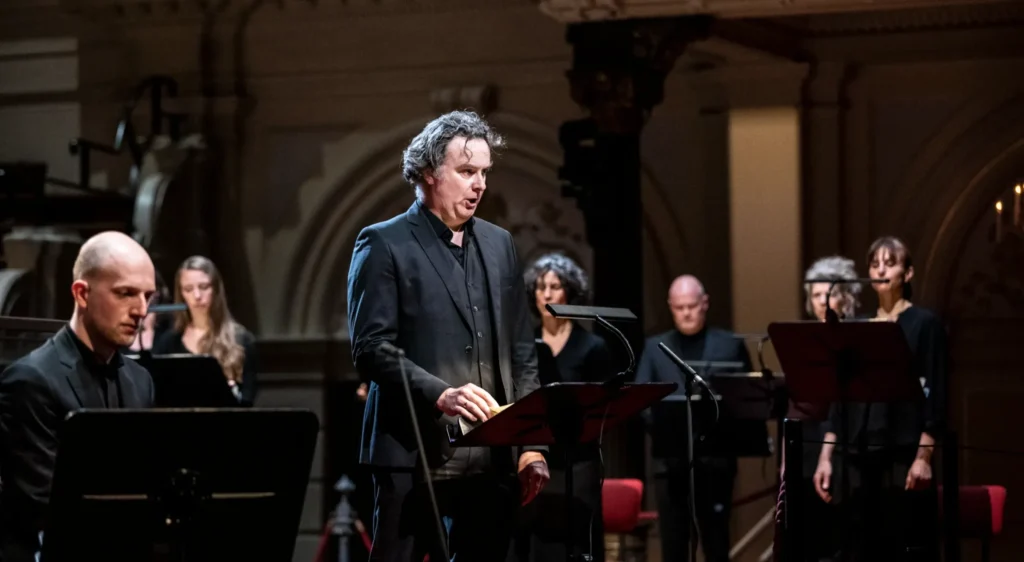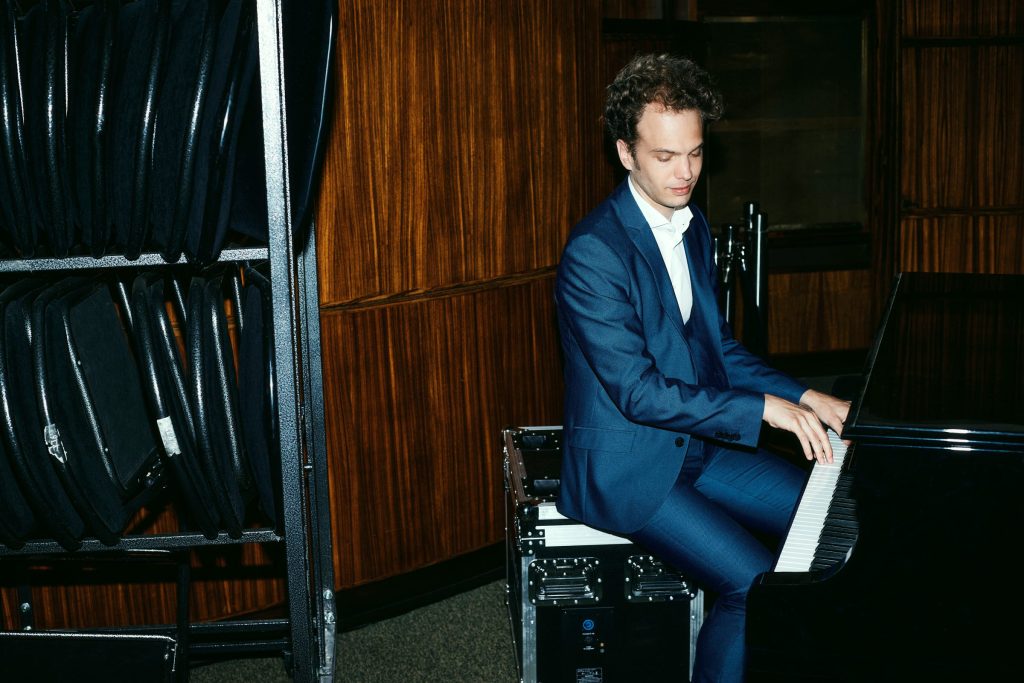
Belgian pianist Julien Libeer is time and again celebrated as one of the most versatile and thoughtful musicians on the musical stage. If you have heard this pianist play before, you will immediately recognise his clarity, refinement, and a remarkable sensitivity to colour and structure. What we also know Libeer for is his search for dialogue: between works, between composers, and between listeners. He previously appeared on stage with Cappella Amsterdam in The Well-Tempered Songbook, in which movements from Bach’s Das wohltemperierte Klavier were mirrored against works spanning seven centuries of music. The five-star review from De Volkskrant that followed was the crowning glory of this wonderful concert series.
In the lead-up to our concert series Gespiegeld | Miroirs — in which Libeer once again takes to the stage with Cappella Amsterdam — we delved into the art of mirroring in music. How do the sounds of the piano and the choir relate to one another? What does reflection mean to him as a musician? And how do the chosen works bring unexpected connections to light?
We spoke with Libeer about his vision on listening, interpreting, and ensemble playing, and he offers a preview of what audiences can look forward to.
How did you first truly encounter music as a child or young person?
I did not come from a professionally musical household, but when I was a toddler my parents had recorded a documentary about Bernstein’s own recording of West Side Story. To their amazement, I wore it out with repeated viewings, without really understanding what it was about. I wanted to be like Bernstein. That didn’t quite work out — who could manage that? — but musician I remained.
Do you think there were people or experiences that had a lasting influence on your musical development?
More than that — I assume we are essentially nothing more than the sum of our various influences. My first piano teacher Annie Denecker, my later mentor Jean Fassina in Paris, my years with Maria João Pires, and all manner of encounters with younger and older colleagues who gave me food for thought…
Your approach to piano playing in three words:
To quote the title of a beautiful Bach album by David Fray: dance, sing, think.
Many people describe your playing as clear and poetic. What are, for you personally, the most important qualities you strive for in a performance?
Clear and poetic — I can certainly live with that!
What role does silence, contrast, or "space" play in your musical practice?
Hmm… That is a bit like asking what role “ingredients” play in my cooking… I could fill beautifully poetic pages on the subject, but as an answer that could never be as illuminating as: come and listen!
The title "Gespiegeld" evokes ideas of reflection and dialogue. How do you experience this within the programme? How did the combination of works come about?
Just as in our Bach programme from a few seasons ago, the starting point was to connect Ravel’s piano music to relevant vocal repertoire. Ravel was a man who succeeded in integrating both the past and the future into his music. That creates a great many possibilities in terms of programming — from Fauré (his teacher) through Poulenc to Ešenvalds.
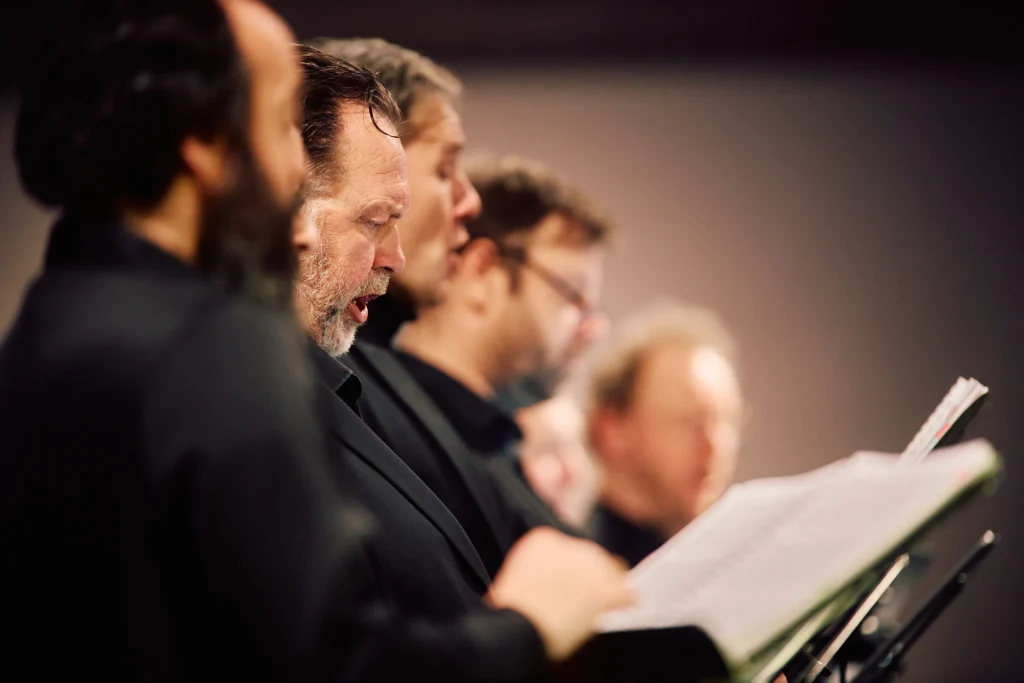
And how do you experience the collaboration with chamber choir Cappella Amsterdam — as a choir, as an ensemble, and as a sound body?
Always a pleasure. Making music alongside a mass of voices is for me one of the most liberating experiences you can have as a musician.
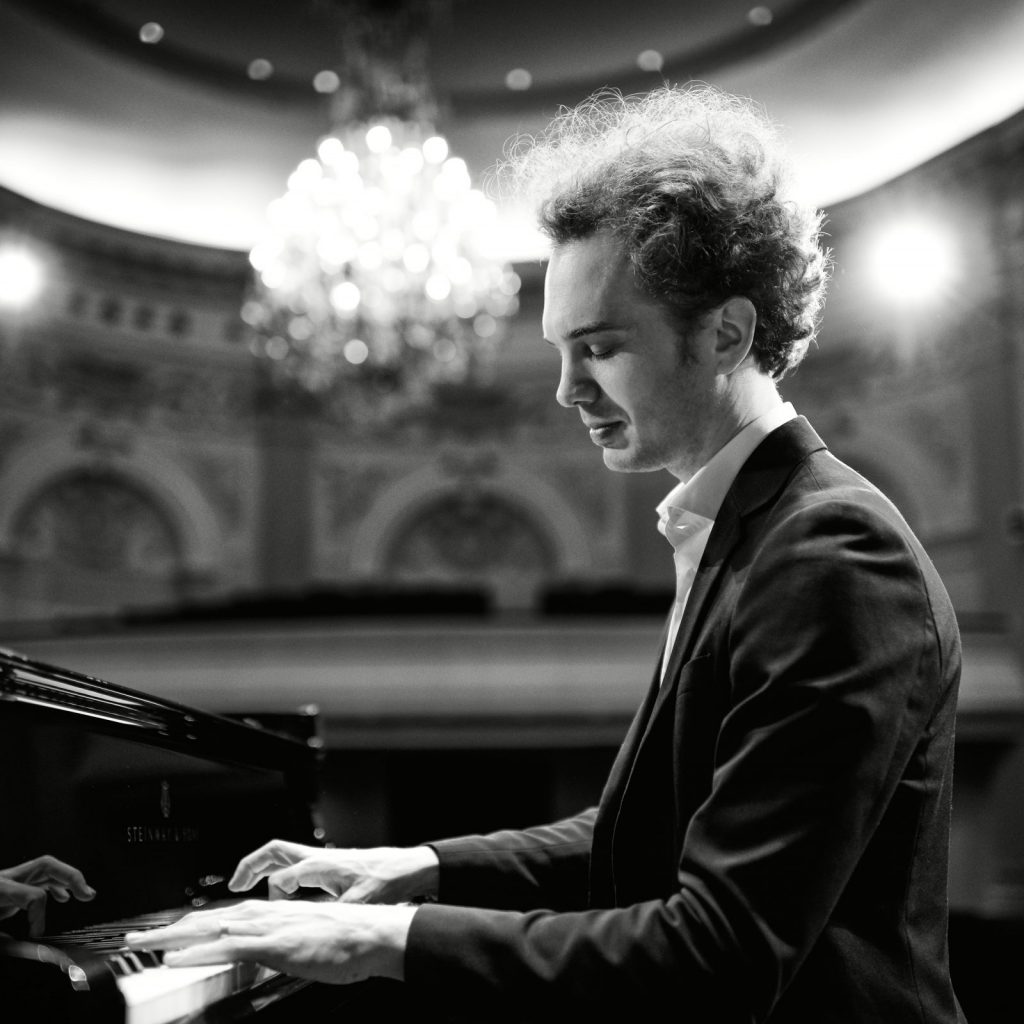
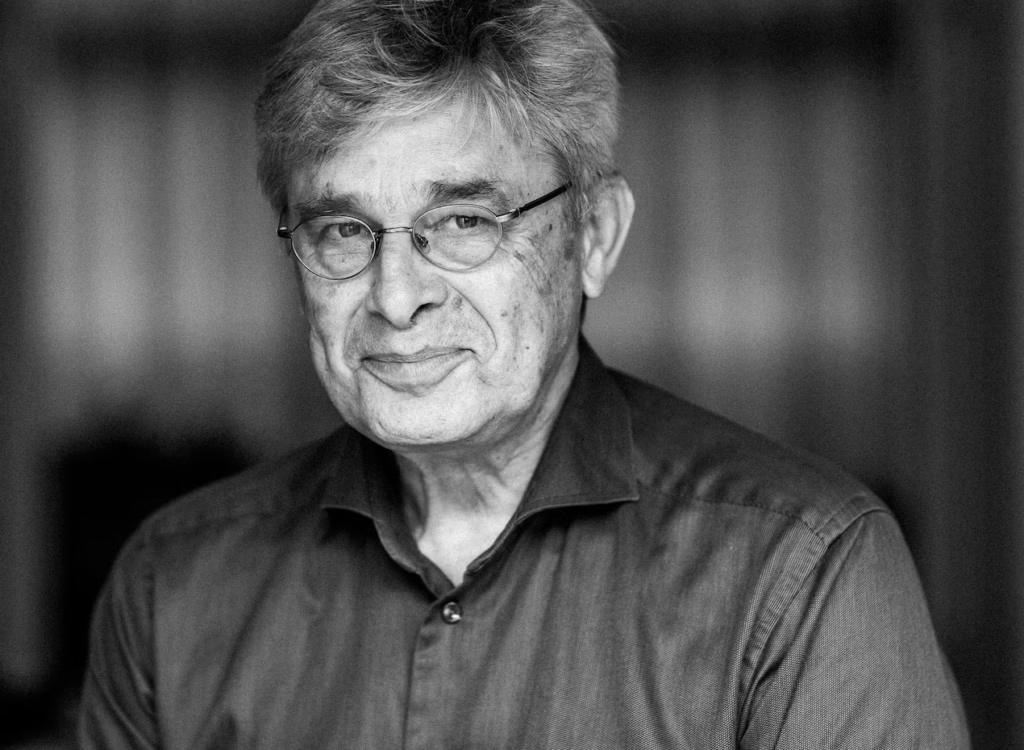
Julien Libeer
What responsibility do you see for musicians in today's society?
Classical musicians in particular are the inheritors of a certain repertoire and a certain kind of practice: our core mission is to keep both alive and, where necessary, to rethink or update them. The danger, of course, is a certain ivory-tower mentality, and anyone who — like me — sometimes feels uneasy about that would do well to take music out of the occasionally clinical context of the concert hall and visit less obvious places.
You have been involved in radio programmes, social music projects, and educational ventures. What drives you in these kinds of initiatives?
Many of those projects came about organically. What I consistently notice is that the process behind making music — the discipline, the craft, the broader stories and context — has always fascinated me more than the concert moment itself. And I am always willing to give as many people as possible access to that bigger picture.