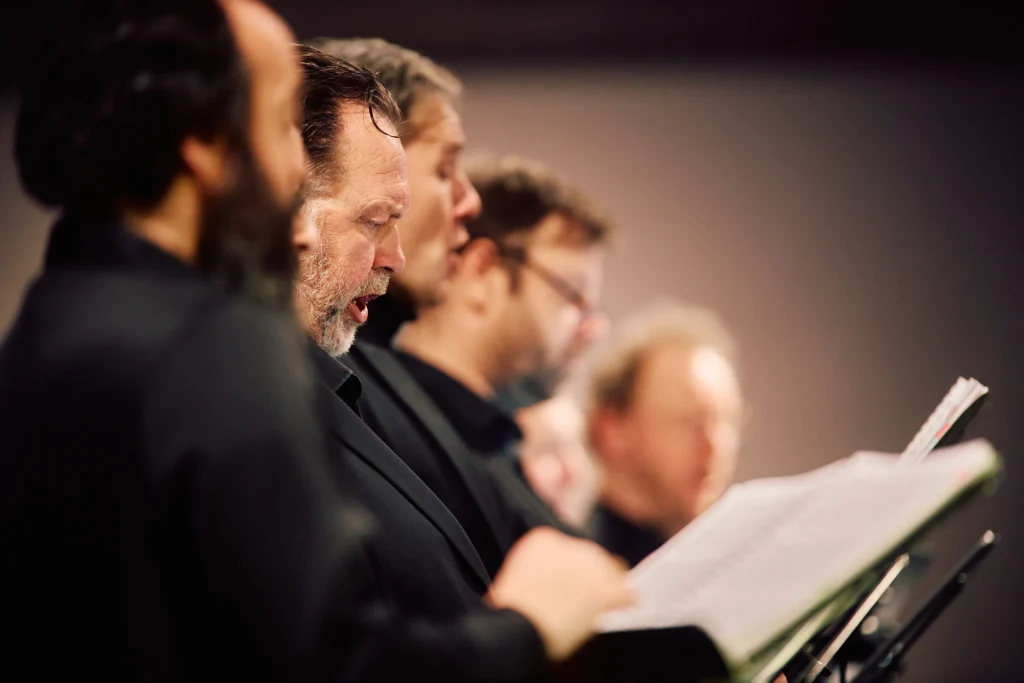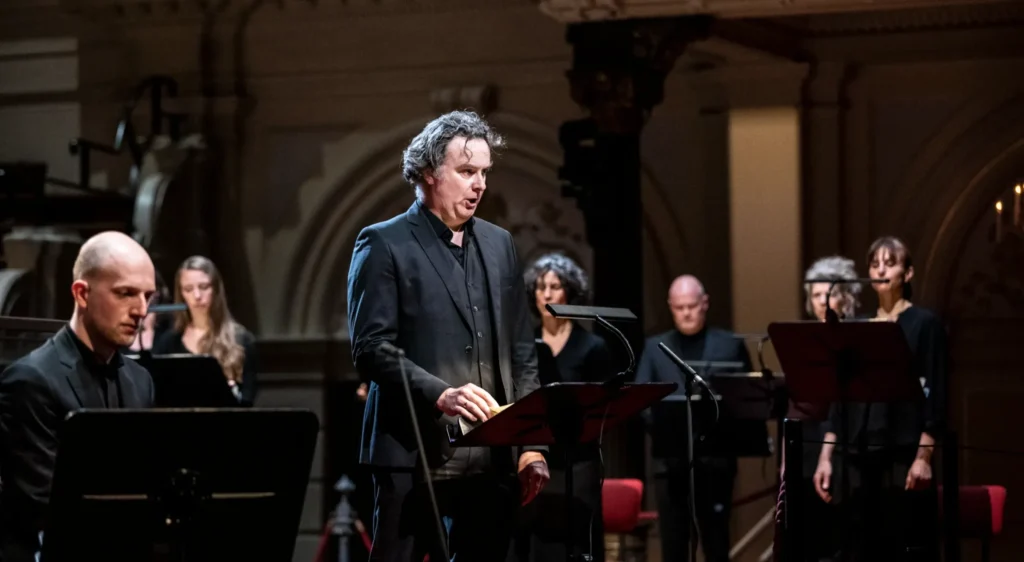
The Cappella Amsterdam Chamber Choir was founded on idealism and, despite changes and crises, grew into a choir with a distinct artistic identity and an enduring drive for innovation. The story of a choir that’s always hungry for more.
Musicians with a mission
In the early 1970s, somewhere in Amsterdam, a handful of singers were singing together. They are musicians with a mission: to showcase the vocal polyphony of Jan Pieterszoon Sweelinck at a time when early music is experiencing a resurgence. Jan Boeke is the founder, with Bernard Winsemius and Harry van der Kamp as early supporters. What they started in 1970 was small, passionate, and barely institutionalized. The result is one of the most acclaimed chamber choirs in Europe.
The story of Cappella Amsterdam is not a linear upward trajectory. It is a story of reinvention: from a project-based approach to professionalism, from a national niche to the international stage, from structural security to an existential crisis—and back again. Each of these phases reveals a different side of the choir, but one thing remains constant: the belief that choral music is a living art form.
The Roots: Sweelinck and the Renaissance of the Ancient
Cappella Amsterdam was founded during a unique cultural period. In the 1970s, historical performance practice found its way to a new audience. Ensembles specializing in early music are popping up like mushrooms, but Cappella Amsterdam distinguished itself early on through its focus on Dutch heritage. Sweelinck is more than just a choice of repertoire: he represents a philosophical stance. His music combines clarity, polyphonic texture, and lyrical expression in a way that this young group of musicians embraces as an artistic ideal.
In those early decades, the choir was what we would now call a project ensemble: loosely organized, driven more by musical urgency than by institutional ambition. But the artistic quality is drawing attention, the ensemble’s reputation is growing, and it is slowly beginning to take on a more solid form.
1990: A Conductor from Within
The decisive turning point came in 1990. Daniel Reuss, born in 1961 in Leiden, has been appointed artistic director. The transition is proceeding as you would expect with a project ensemble—informally: no application process, no committee. The appointment is a matter of mutual trust. Reuss knows the choir inside and out: he sang in it for years as a bass.
Reuss has a wide-ranging background. He studied choral conducting with Barend Schuurman at the Rotterdam Conservatory and founded the Oude Muziek Koor Arnhem at the age of twenty-one. His approach is that of what he himself calls a “committed non-specialist”: he conducts repertoire ranging from the 12th century to contemporary works, and feels at home in a wide variety of musical worlds. That breadth will be a defining factor for Cappella Amsterdam.
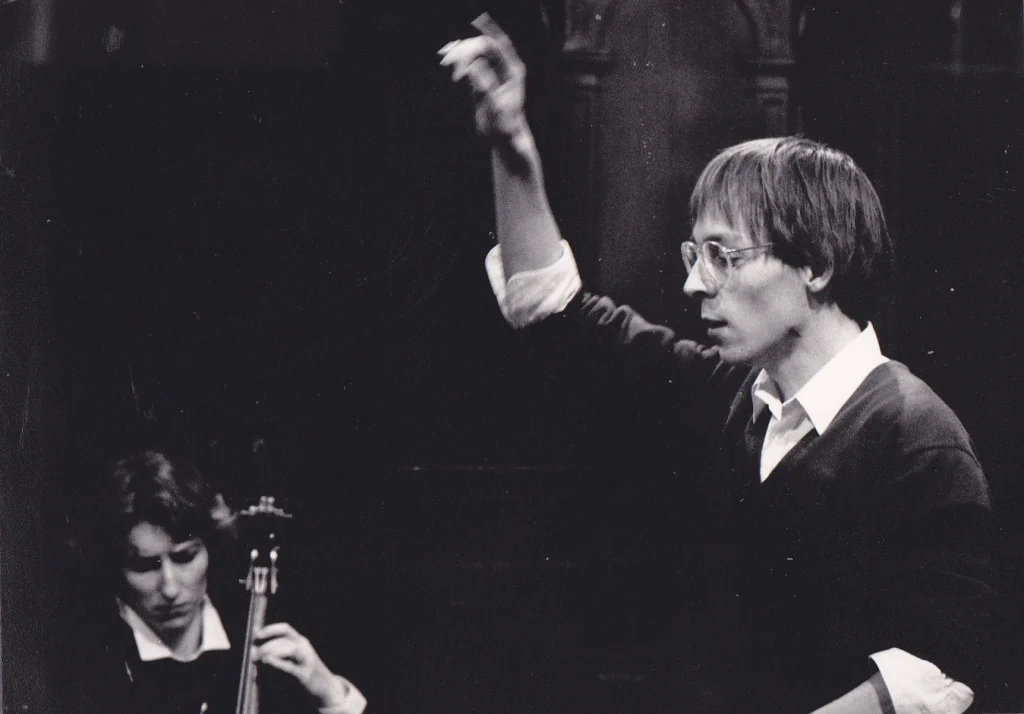
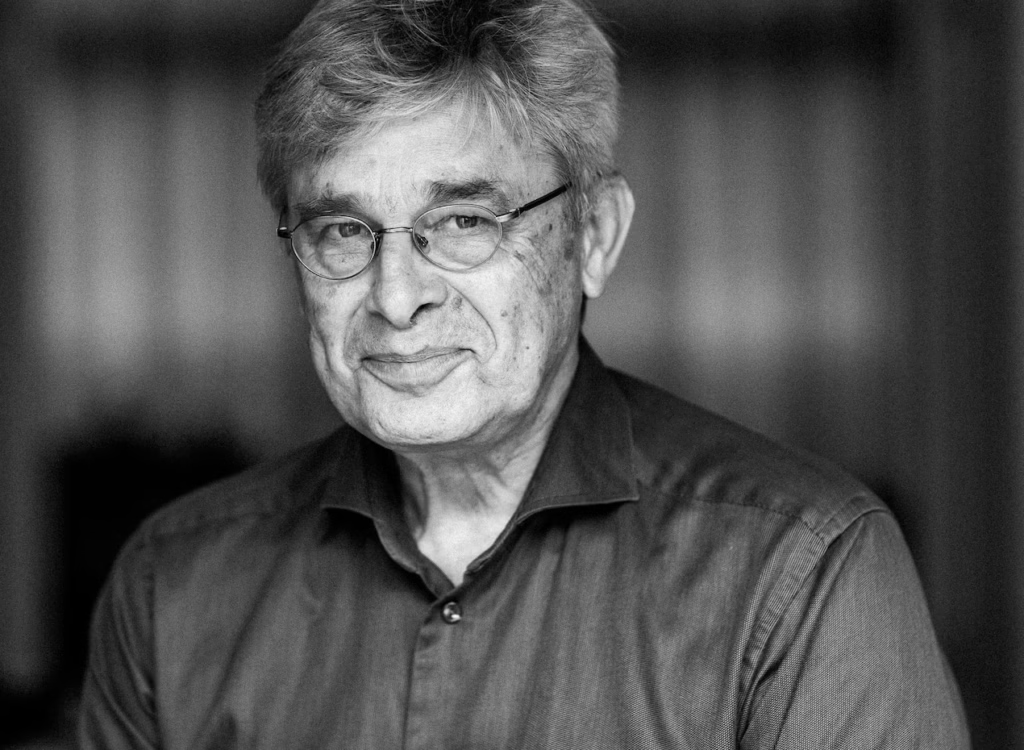
Conductor Daniel Reuss. Photographer: Margriet Agricola
1970 Founded by Jan Boeke; focus on Sweelinck and Dutch vocal polyphony.
1990 Daniel Reuss is taking on the role of artistic director. The beginning of professionalization and the expansion of the repertoire.
1998 Edison Klassiek for the recording of Tan Dun’s Marco Polo with the Radio Chamber Orchestra.
2009 Diapason d’Or for Lux Aeterna (Ligeti/Heppener); VSCD Classical Music Award for a small ensemble.
2010 Grammy nomination for a recording of Frank Martin’s: Golgotha with the Estonian Philharmonic Chamber Choir.
2016 The Performing Arts Fund rejects the grant application. Nearly half a million is lost each year. The choir keeps fighting.
2020 The Performing Arts Fund has awarded a multi-year grant of 700,000 euros per year.
2021 Edison Klassiek for album In Umbra Mortis (De Wert & Rihm).
2024 Edison Classical Audience Award for Album Missa Sancti Georgii (Herman Finkers) with Holland Baroque. | VSCD Classical Music Award: The Ovatie for the production *Aleppo* by artistic director Leonard Evers, featuring singers Wasim Arslan and Jawa Manla
2026 German Record Critics’ Award for the album *Stravinsky: Late Works*.
Under Reuss’s leadership, the choir is rapidly becoming more professional. The ensemble has grown into a fully professional chamber choir of about twenty-five singers. The repertoire has expanded considerably: in addition to Renaissance and Baroque music, Romantic and contemporary works are now regularly included in the program. Dutch composers such as Ton de Leeuw, Robert Heppener, Klaas de Vries, and Peter Schat, as well as foreign composers such as Arvo Pärt, Leoš Janáček, and György Ligeti, are becoming regular features in the program. Cappella Amsterdam thus positions itself as a flexible chamber choir with an exceptionally broad historical and stylistic range: distinct from both specialized early-music ensembles and more traditional choral programming.
International invitations followed: La Folle Journée in Nantes, Settembre Musica in Turin, and Ars Musica in Brussels. Recordings for Harmonia Mundi have won numerous awards. In 2003 and 2006, Reuss also served as chief conductor of the RIAS Kammerchor in Berlin. In 2006, he was personally invited by Pierre Boulez to attend the Lucerne Festival Academy. In 2016, he was awarded the Order of the Dutch Lion (Knight).
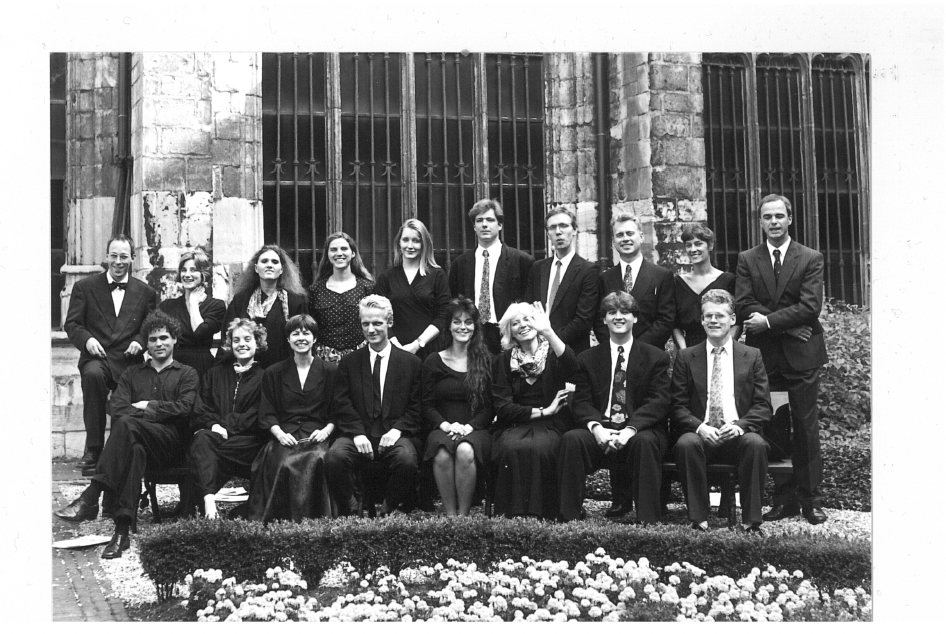
Cappella Amsterdam
2016: a bolt from the blue
In August 2016, a shock came that no one had seen coming. The Performing Arts Fund has rejected Cappella Amsterdam’s grant application for the 2017–2020 period. We’re talking about nearly half a million euros a year: the difference between survival and closure.
“It came as a complete surprise to everyone, because the choir is highly regarded, even internationally. They put together wonderful programs and produce beautiful CDs.”
— music journalist Guido van Oorschot, Radio 4, August 2016
In the NRC Handelsblad, Reuss is described as “surprised and bewildered.” “Our application was well thought out. The response from the committee of the Amsterdam Fund for the Arts, which evaluated the same application using the same criteria, was completely different—namely, very positive. But that was for 75,000 euros; this one is for 500,000. And without that 500,000, we’re out of business.”
The reasoning of the Performing Arts Fund is met with dismay by many. The fund evaluated “not reputations, but plans,” and deemed Cappella Amsterdam’s entrepreneurial spirit “weak.” This is despite the fact that the Amsterdam Fund for the Arts, which reviewed the same application, had reached a completely different conclusion and deemed the ensemble to be professionally managed. The contrast is striking: the same chorus, the same documents, conflicting judgments.
The appeal filed by the choir led to a partial revision of the decision in April 2017, but not of the outcome. The rejection remains in effect for the entire 2017–2020 period.
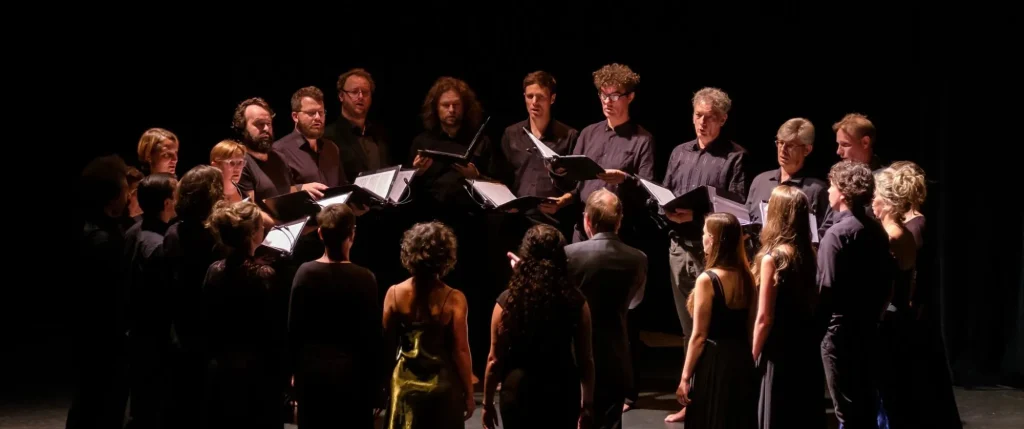
Cappella Amsterdam
What the music world thought of it
“It is a sad state of affairs that Cappella Amsterdam—which has earned four- and five-star reviews and released CDs that have won multiple awards—receives zero euros in support.”
-NRC Handelsblad, August 2016“Artistic quality now seems to be definitively secondary to entrepreneurship. Ensemble culture, just like jazz in the Netherlands, is taking another hit.”
-Merlijn Kerkhof, music critic“Doesn’t a reputation built up over the years offer a much greater guarantee of artistic quality than a ‘plan’? A reputation is the result of years of proven quality.”
-Klaas Stok, conductor of the Groot Omroepkoor“Cappella Amsterdam is a breeding ground for daring productions. The loss of one of the top choirs in the choral world affects the entire field.”
-Donemus, publisher of contemporary music
The Dutch Association for the Performing Arts (NAPK) describes the system as one that “does not provide adequate safeguards for an experienced civil society sector that operates on a continuous basis.” Cappella Amsterdam, along with Orkater and Korzo, is an example of institutions that have been left out. Not because of artistic shortcomings, but because of how they score on policy criteria.
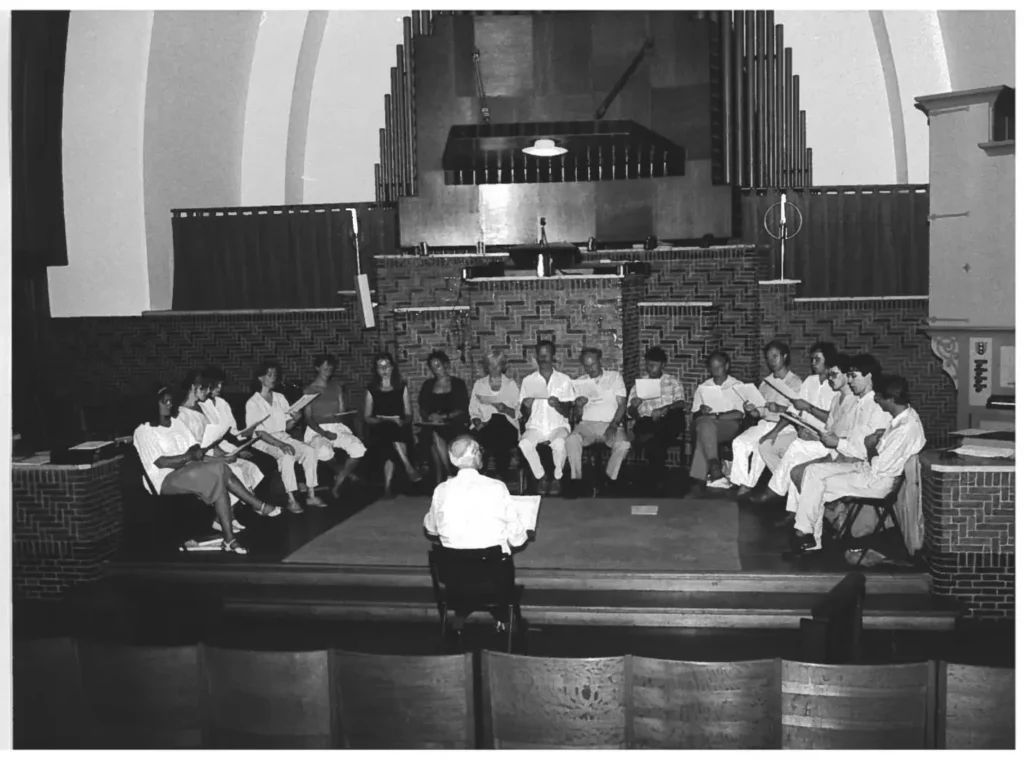
The Years of Restart and Growth
Fortunately, and of course, the choir isn’t going under. With the support of private donors, other foundations, and a loyal audience, Cappella Amsterdam is able to continue its activities. The crisis inspires artistic boldness. Bold productions are being created. The choir is beginning to experiment, including with stages and settings outside the concert hall. Think about The Longest Night, in 2019, where early choral music shares the stage with electronic music and a horsewhip.
During this period, Cappella Amsterdam handed over artistic leadership to a new generation of conductors. Several young talents were given carte blanche: the freedom to put together and conduct their own full-length program. It was a gesture of trust, but also an artistic investment in the future of the world of choral music.
One of the first was Lodewijk van der Ree (1986), who was given the opportunity in 2019 to put together a program entirely of his own choosing. Van der Ree had already made a name for himself as the conductor of Consensus Vocalis and, that same year, won the Kersjes Prize, the Dutch conducting prize for young choral conductors. The jury described him as “a passionate conductor with an intelligent approach to the score, a clear beat, and the ability to draw a choir into his vision.” His carte blanche at Cappella Amsterdam, titled Time and the Bell, revolved around space and time as musical and philosophical themes: a program that deliberately pushed the boundaries of conventional choral concert programming.
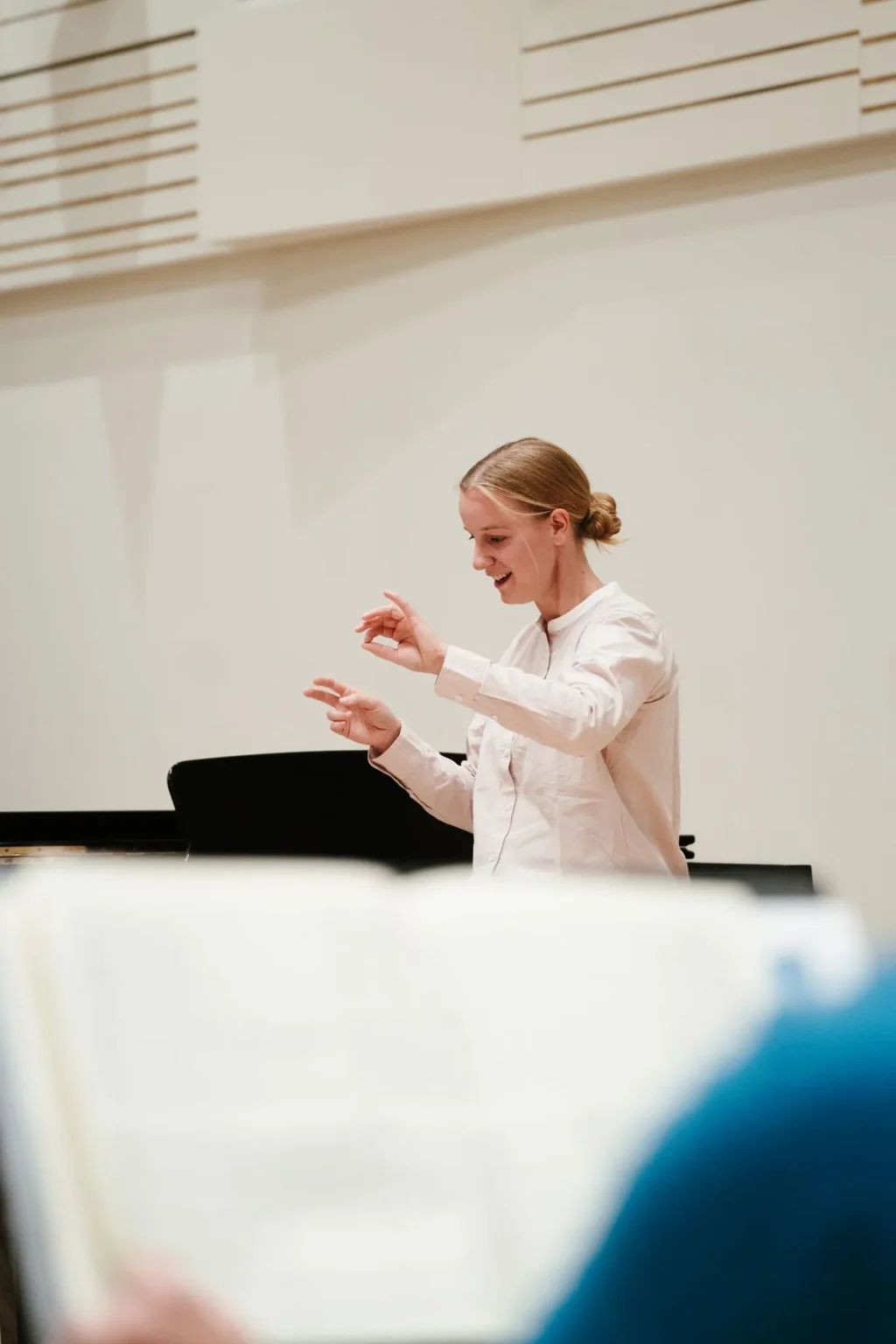
However, his closest collaboration developed with the Latvian conductor Krista Audere (1989). Audere studied at the Riga Conservatory, after which she continued her studies in choral conducting in Amsterdam and Stuttgart. In 2019, Reuss—whom she calls her mentor—gave her carte blanche at Cappella Amsterdam for the first time. That successful collaboration was followed by others. In October 2021, Audere won the Eric Ericson Award in Stockholm, the most prestigious international competition for choral conductors, which is awarded only once every three years. The jury praised her for her “outstanding energy and dynamic poetic quality” and her ability to inspire singers and draw them into her musical vision.
In 2028, Audere will succeed Daniel Reuss as artistic director and chief conductor of Cappella Amsterdam. In doing so, the ensemble is not choosing to break with the past, but rather to embrace a new artistic generation that has emerged within the choir in recent years.
Recognition will follow in 2020. The Performing Arts Fund is awarding a multi-year grant. This time, 700,000 euros per year, which is more than the requested 571,670 euros. The foundation describes Cappella Amsterdam as an ensemble that “has reinvented itself.” The originality of the programs and the bold collaborations are now cited as strengths.
“Cappella Amsterdam has reinvented itself in recent years. This is evident, among other things, from the bold collaborations the choir has undertaken.”
— Performing Arts Fund, explanation of 2020 grant award
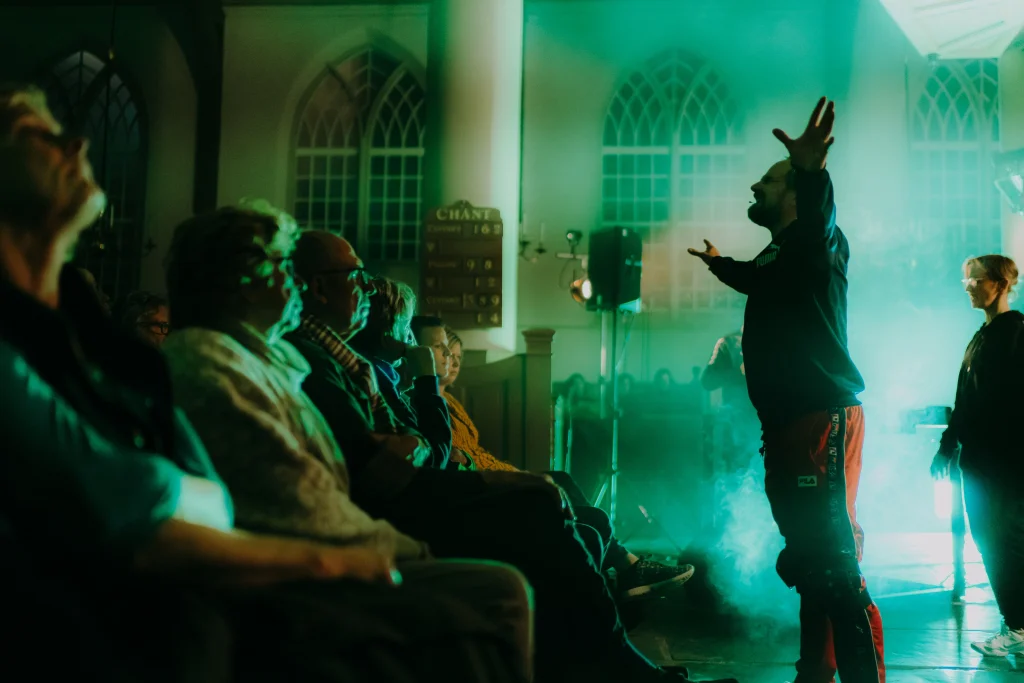
De Langste Nacht (2019)
The Sound of Community
What ultimately sets Cappella Amsterdam apart is not only the quality of its performances—its artistry is undisputed—but also the human dimension of the ensemble. Singers stay for a long time and grow together, both musically and personally. They consistently emphasize the “sense of family” when they talk about the choir. That sense of unity is audible: critics cite the ensemble’s homogeneous, warm sound as one of its most recognizable characteristics. The richness of vocal timbres that leads to that sound cannot be achieved mechanically, because it requires trust between the voices.
In recent years, that sense of community has also become part of the artistic program. Cappella Amsterdam actively seeks out new connections: with new listeners, with young artists, and in contexts where choral music is not the norm. The collaboration with Zero Dance Theatre is a prime example of this. In production Les Noces, Stravinsky’s uncompromising composition on marriage and community, where the raw power of vocal music meets the physical, layered movement language of choreographer Denden Karadeniz, deeply rooted in urban dance and contemporary techniques. Choral music that not only sounds good but also moves people, thereby reaching a new audience. Educational programs, participatory projects, and these kinds of cross-disciplinary artistic collaborations have become not just peripheral activities but a core part of our identity.
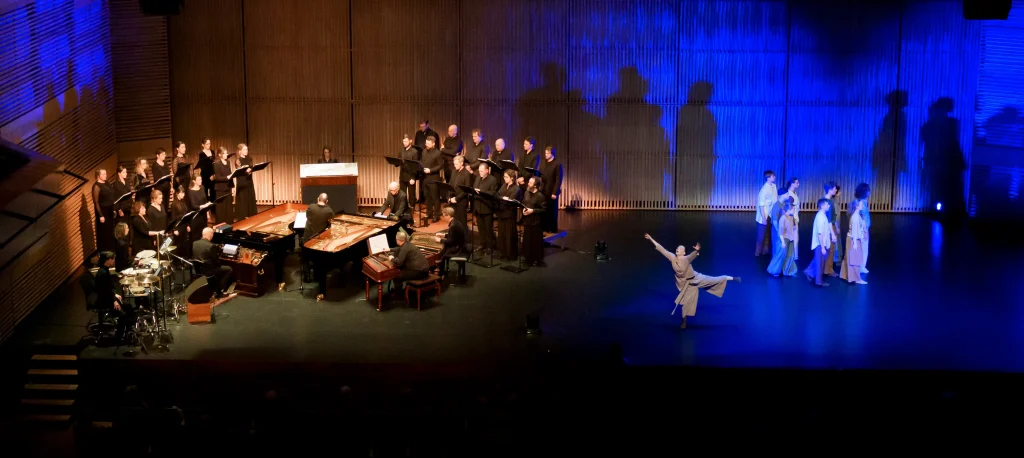
Les Noces (2026) with Zero Dance Theatre
On the way to the first century
Fifty years after its first Sweelinck rehearsal, Cappella Amsterdam faces the same fundamental question it did at its founding: how do you keep choral music alive? The ensemble’s response remains consistent, even through the crises: by continually reexamining it. The canon certainly needs some maintenance. But it also calls for new voices, new contexts, and new listeners.
The choir’s strength lies in its willingness to reinvent itself. Not as a buzzword, but as a practice. From Sweelinck to Pärt, from the attic room to the international stage, from a funding crisis to renewed self-confidence: Cappella Amsterdam has been a choir on the move for fifty years. Firmly rooted in craftsmanship, yet constantly curious about what choral music can be today—and for whom it is meant.
The story isn’t finished. Each new season is a new chapter in a longer musical story. From conductor to conductor, from singer to singer, from one generation of listeners to the next.