Cappella Amsterdam grew from idealism, through changes and crises, into a choir with a distinctive artistic signature and an enduring hunger for renewal. The story of a choir that always wanted more.
Musicians with a mission
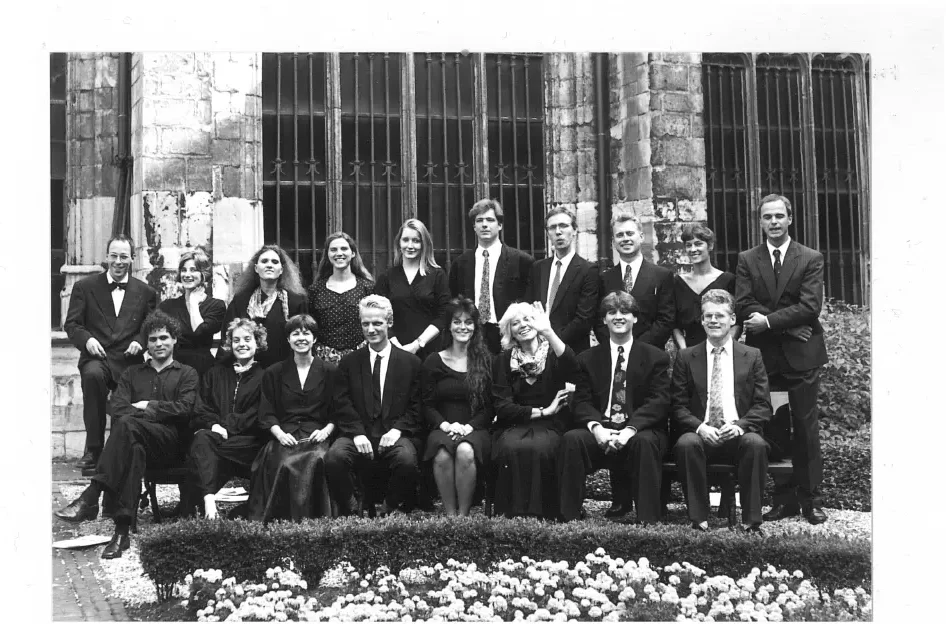
In the early nineteen-seventies, somewhere in Amsterdam, a handful of singers gather to rehearse. They are musicians with a mission: to give the vocal polyphony of Jan Pieterszoon Sweelinck a platform at a time when early music is undergoing a new wave of appreciation. Jan Boeke is the driving force, with Bernard Winsemius and Harry van der Kamp as early collaborators. What they begin in 1970 is small, passionate and barely institutionalised. What it grows into is one of the most acclaimed chamber choirs in Europe.
The story of Cappella Amsterdam is not a straight upward line. It is a story of reinvention: from project ensemble to professional institution, from national niche to international stage, from structural security to existential crisis, and back again. Each of those phases reveals a different face of the choir, but one thing remains constant: the conviction that choral music is something alive.
The roots: Sweelinck and the renaissance of early music
Cappella Amsterdam comes into being during a remarkable cultural moment. In the nineteen-seventies, historically informed performance practice finds its way to a new audience. Ensembles devoted to early music spring up everywhere, but Cappella Amsterdam distinguishes itself from the outset through its focus on the Dutch musical heritage. Sweelinck is more than a programming choice: he is a philosophical position. His music combines clarity, polyphonic texture and textual expression in a way the young ensemble embraces as its artistic ideal.
In those first decades, the choir is what would today be called a project ensemble: loosely organised, driven by musical urgency rather than institutional ambition. But the artistic level attracts attention, the reputation grows, and slowly the ensemble begins to take on more permanent form.
1990: a conductor from within
The decisive turning point comes in 1990. Daniel Reuss, born in 1961 in Leiden, is appointed artistic director. The handover unfolds as one might expect within a project ensemble: informally, without an open application process or selection committee. The appointment is a matter of mutual trust. Reuss knows the choir from the inside: he has sung in it himself for years, as a bass.
Reuss brings a wide frame of reference. He studied choral conducting with Barend Schuurman at the Rotterdam Conservatoire and founded the Oude Muziek Koor Arnhem at the age of twenty-one. His approach is that of what he calls a “convinced non-specialist”: he conducts repertoire spanning the twelfth century to contemporary works, and is equally at home in widely differing musical worlds. That breadth becomes defining for Cappella Amsterdam.
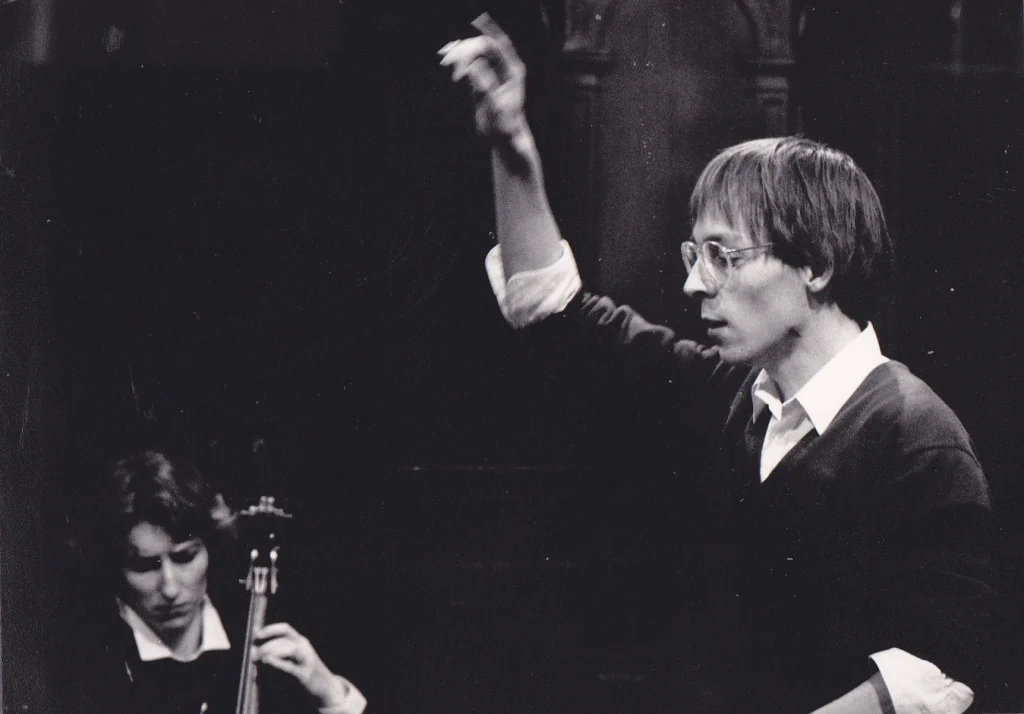
Daniel Reuss
1970 Founded by Jan Boeke; focus on Sweelinck and Dutch vocal polyphony.
1990 Daniel Reuss appointed as artistic director. Beginning of professionalisation and broadening of repertoire.
1998 Edison Klassiek for the recording of Tan Dun’s Marco Polo with the Radio Chamber Orchestra.
2009 Diapason d’Or for Lux Aeterna (Ligeti/Heppener); VSCD Classical Music Prize as small ensemble.
2010 Grammy nomination for recording of Frank Martin’s Golgotha with the Estonian Philharmonic Chamber Choir.
2016 Fonds Podiumkunsten rejects the funding application. Nearly half a million euros per year disappears. The choir fights on.
2020 Fonds Podiumkunsten awards multi-year subsidy of 700,000 euros per year.
2024 Edison Klassiek Audience Prize for Missa Sancti Georgii (Herman Finkers) with Holland Baroque.
Under Reuss, the choir professionalises rapidly. The ensemble grows into a fully professional chamber choir of around twenty-five singers. The repertoire expands considerably: alongside Renaissance and Baroque, Romantic and contemporary music become regular fixtures. Dutch composers such as Ton de Leeuw, Robert Heppener, Klaas de Vries and Peter Schat, as well as international figures like Arvo Pärt, Leoš Janáček and György Ligeti, become staples of the programming. Cappella Amsterdam positions itself as a flexible chamber choir with an exceptionally broad historical and stylistic reach, distinct from both specialist early music ensembles and more conventional choral programming.
International invitations follow: La Folle Journée in Nantes, Settembre Musica in Turin, Ars Musica in Brussels. Recordings for harmonia mundi attract a string of prizes. Between 2003 and 2006, Reuss also serves as chief conductor of the RIAS Kammerchor in Berlin. In 2006, Pierre Boulez personally invites him to the Lucerne Festival Academy. In 2016, he is appointed a Knight in the Order of the Dutch Lion
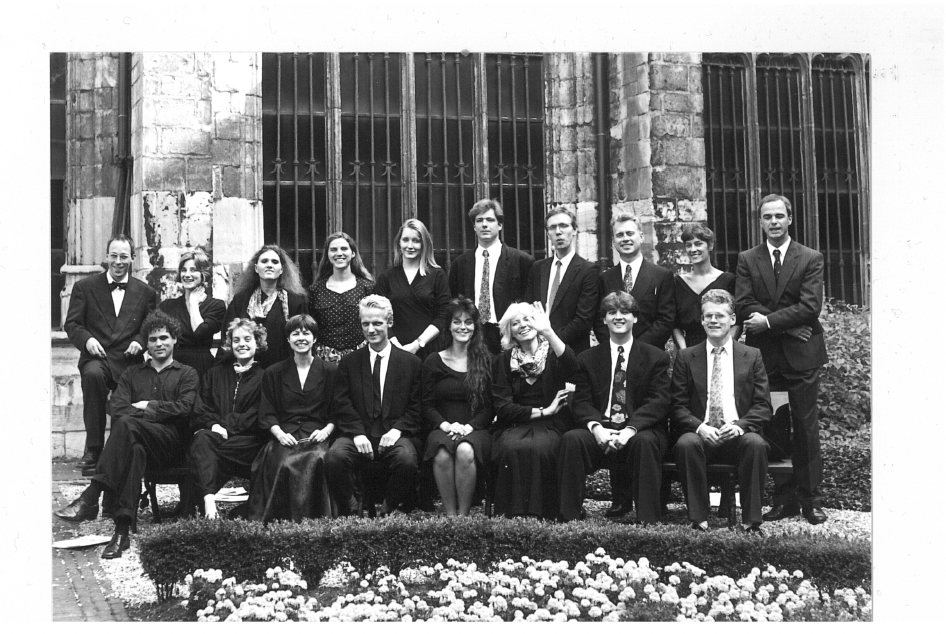
Cappella Amsterdam
2016: a bolt from the blue
In August 2016 comes a shock that no one had seen coming. The Fonds Podiumkunsten (the Dutch performing arts fund) rejects Cappella Amsterdam’s application for the period 2017–2020. The sum at stake is nearly half a million euros per year: the difference between survival and closure.
“It came as a bolt from the blue for everyone, because the choir has an excellent reputation, internationally too. They make beautiful programmes, wonderful recordings.”
— music journalist Guido van Oorschot, Radio 4, August 2016
Reuss tells NRC Handelsblad he is “surprised and dismayed.” “Our application was thoroughly substantiated. The response from the Amsterdam Arts Fund committee, which assessed the same application using the same criteria, was completely different: overwhelmingly positive. But that concerns 75,000 euros. This concerns half a million. And without that half a million, we are gone.”
The reasoning of the Fonds Podiumkunsten bewilders many. The fund assessed “not reputations, but plans”, and deemed Cappella Amsterdam’s entrepreneurship “weak”, even as the Amsterdam Arts Fund, reviewing the identical application, had reached the opposite conclusion and found the ensemble to be professionally and capably run. The contrast is stark: the same choir, the same documents, diametrically opposed verdicts.
An appeal lodged by the choir leads, in April 2017, to a partial review of the decision, but not of its outcome. The rejection stands for the full period 2017–2020.
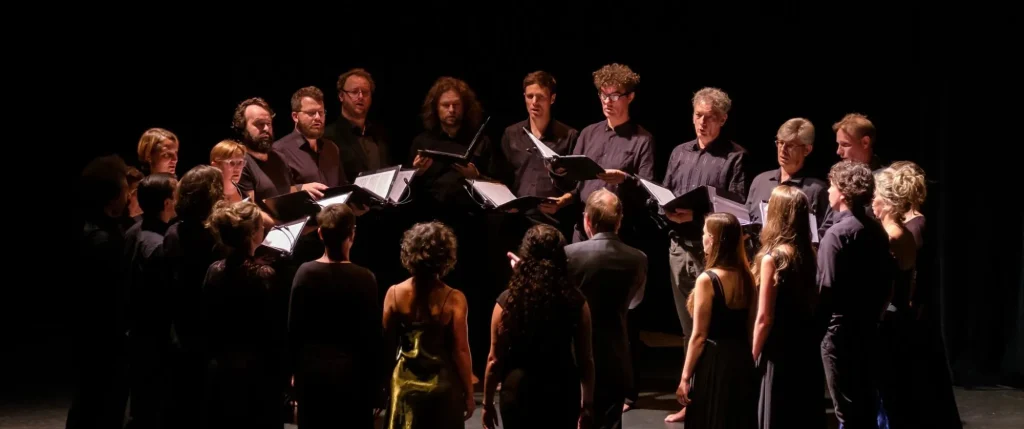
Cappella Amsterdam
What the music world made of it
“Artistic quality now seems definitively subordinate to entrepreneurship. The ensemble culture in the Netherlands takes yet another blow — just like jazz did.”
— Merlijn Kerkhof, music critic“Does a reputation built over many years not offer a far greater guarantee of artistic quality than a ‘plan’? Reputation is the result of quality proven year after year.”
— Klaas Stok, conductor, Groot Omroepkoor“Cappella Amsterdam is a breeding ground for bold productions. Cutting off one of the leading names in the choral world affects the entire field.”
— Donemus, publisher of contemporary music
The Dutch Association for the Performing Arts (NAPK) speaks of a system that “offers no adequate protection for an experienced mid-tier sector operating with continuity.” Cappella Amsterdam is cited alongside Orkater and Korzo as an example of institutions left out in the cold — not because of artistic shortcomings, but because of how they score against policy criteria.
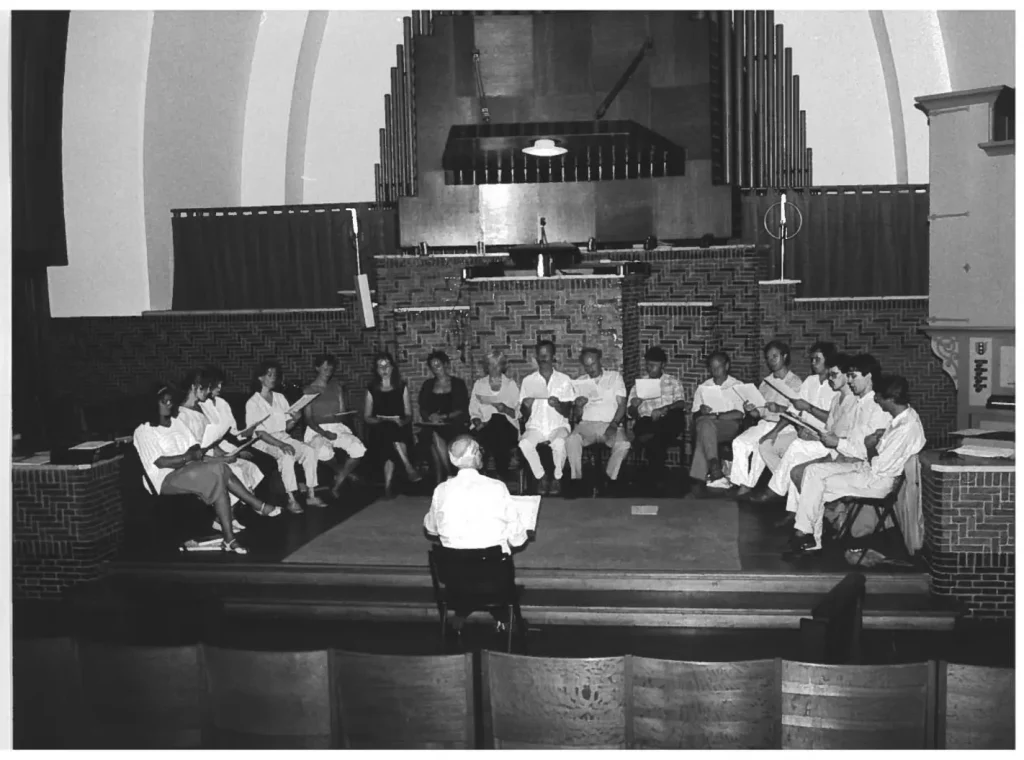
The years of recovery and growth
The choir does not go under. With the support of private donors, other funds and a loyal audience, Cappella Amsterdam keeps going. The crisis inspires artistic boldness. Daring productions are made. The choir begins to experiment with venues and contexts beyond the concert hall — among them De Langste Nacht (The Longest Night) in 2019, in which early choral music shared the stage with electronic music and a horse whip.
During this period, Cappella Amsterdam also began handing artistic leadership to a new generation of conductors. Several young talents were given carte blanche: the freedom to devise and conduct a full evening of their own choosing. It was a gesture of trust, but also an artistic investment in the future of choral music more broadly.
One of the first was Lodewijk van der Ree (b. 1986), who in 2019 was given the opportunity to devise an entirely independent programme. Van der Ree had already established himself as conductor of Consensus Vocalis and, in the same year, received the Kersjesprijs — the Dutch conducting prize for young choral directors. The jury described him as “an inspired conductor, with an intelligent approach to the score, a clear beat and the ability to carry a choir along in his vision.” His carte blanche, titled Time and the Bell, centred on space and time as musical and philosophical themes — a programme that deliberately sought the edges of conventional choral concert-making.
The deepest collaboration, however, developed with Latvian conductor Krista Audere (b. 1989). Audere trained at the Riga Conservatoire before continuing her conducting studies in Amsterdam and Stuttgart. In 2019, Reuss, whom she describes as her mentor, gave her her first carte blanche with Cappella Amsterdam. Further successful collaborations followed. In October 2021, Audere won the Eric Ericson Award in Stockholm, the most prestigious international competition for choral conductors, awarded once every three years. The jury praised her “outstanding energy and dynamic poetic quality” and her ability to inspire singers and draw them into her musical vision.
In 2028, Audere will succeed Daniel Reuss as artistic director and chief conductor of Cappella Amsterdam: a succession that embodies the logic of these years of renewal: not an outsider brought in, but someone who has come to know the choir from within, and whose talent has in part been nurtured by Cappella Amsterdam itself.
“Cappella Amsterdam has reinvented itself over the past period. This is evident, among other things, in the bold collaborations the choir has entered into.”
— Fonds Podiumkunsten, statement on subsidy award, 2020
In 2020, recognition arrives. The Fonds Podiumkunsten awards a multi-year subsidy, this time 700,000 euros per year, more than the 571,670 euros originally requested. The fund describes Cappella Amsterdam as an ensemble that “has reinvented itself.” The originality of its programmes and the boldness of its collaborations are now cited as strengths: precisely the artistic risk-taking that had previously been deemed a weakness.
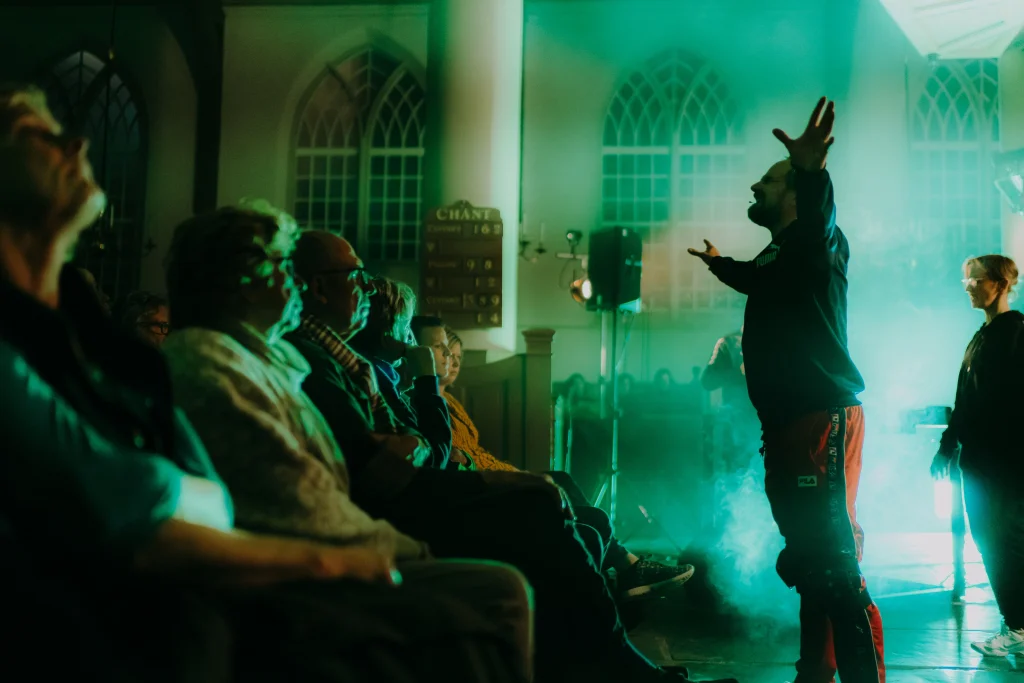
De Langste Nacht (2019)
The sound of community
What ultimately distinguishes Cappella Amsterdam is not only the quality of its performances, that craftsmanship is beyond question, but the human texture of the ensemble. Singers stay for years, growing together, musically and personally. The sense of “family” is consistently emphasised when they speak about the choir themselves. That connectedness is audible: critics consistently cite the homogeneous, warm sound as one of the ensemble’s most recognisable qualities. The richness of tone colours that produces that sound cannot be achieved mechanically. It requires trust between the voices.
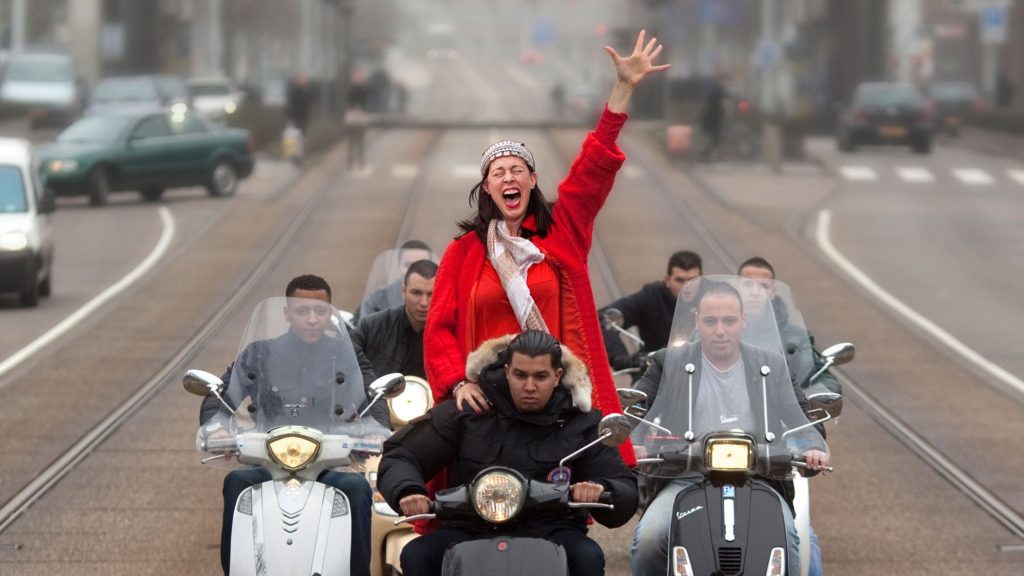
In recent years, that sense of community has also become an artistic programme in itself. Cappella Amsterdam actively seeks new encounters: with new audiences, with young makers, in contexts where choral music is not taken for granted. The collaboration with Zero Dance Theatre is a vivid example. In the production of Les Noces, Stravinsky’s uncompromising composition about marriage and community, the raw power of choral music meets the physical, layered movement language of choreographer Denden Karadeniz, deeply rooted in urban dance and contemporary techniques. Choral music that not only sounds, but moves, and in doing so reaches a new public. Educational projects, participatory trajectories and collaborations that cross art form boundaries are not peripheral programming but have become core identity.
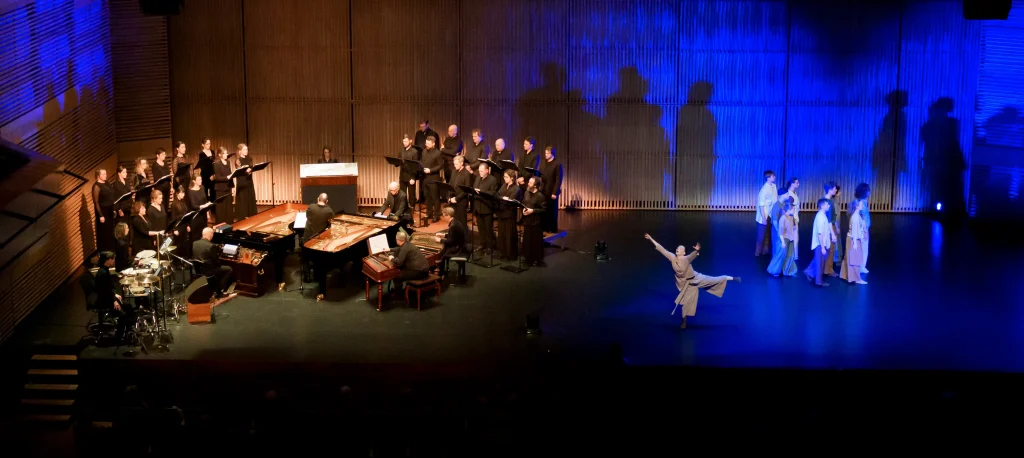
Les Noces (2026) with Zero Dance Theatre
On the way to the first century
Fifty years after the first Sweelinck rehearsal, Cappella Amsterdam faces the same fundamental question it faced at its founding: how do you keep choral music alive? The answer the ensemble gives is consistent, even through the crises: by questioning it anew, again and again. The canon deserves care: certain works must keep resounding. But it also calls for new voices, new contexts and new listeners.
The strength of the choir lies in that willingness to reinvent. Not as a fashionable concept, but as a practice. From Sweelinck to Pärt, from a back room to the international stage, from funding crisis to renewed confidence: Cappella Amsterdam has been a choir in motion for fifty years. Firmly grounded in craftsmanship, but perpetually curious about what choral music can be today, and for whom it sounds.
The story is not finished. Every new season is a fresh breath in a longer musical narrative, from conductor to conductor, from singer to singer, from one generation of listeners to the next.