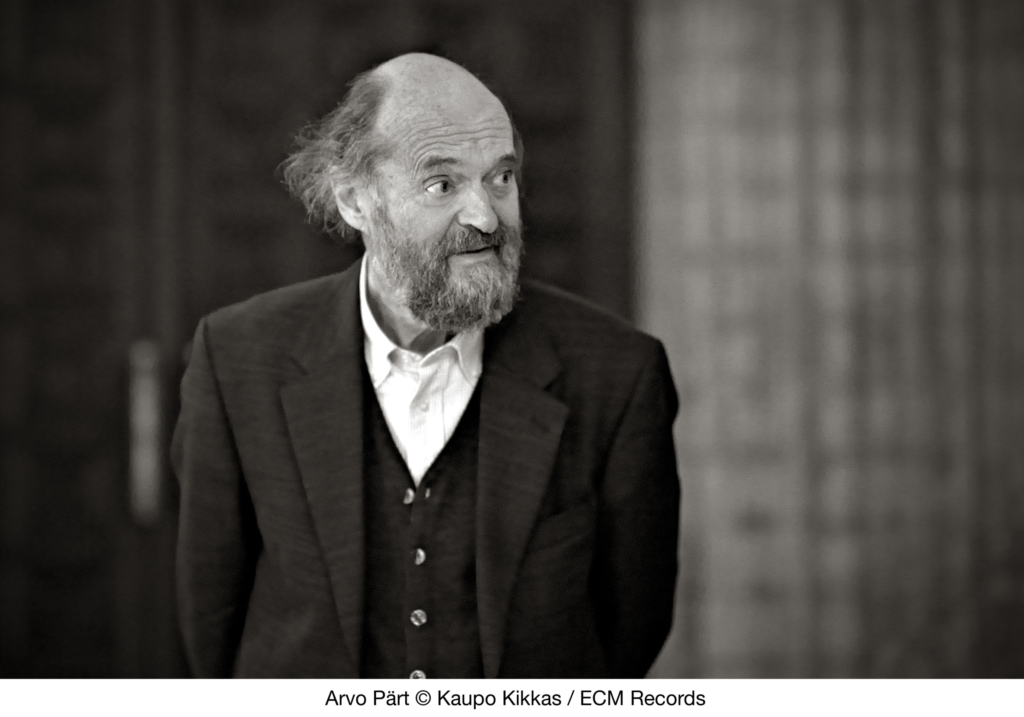
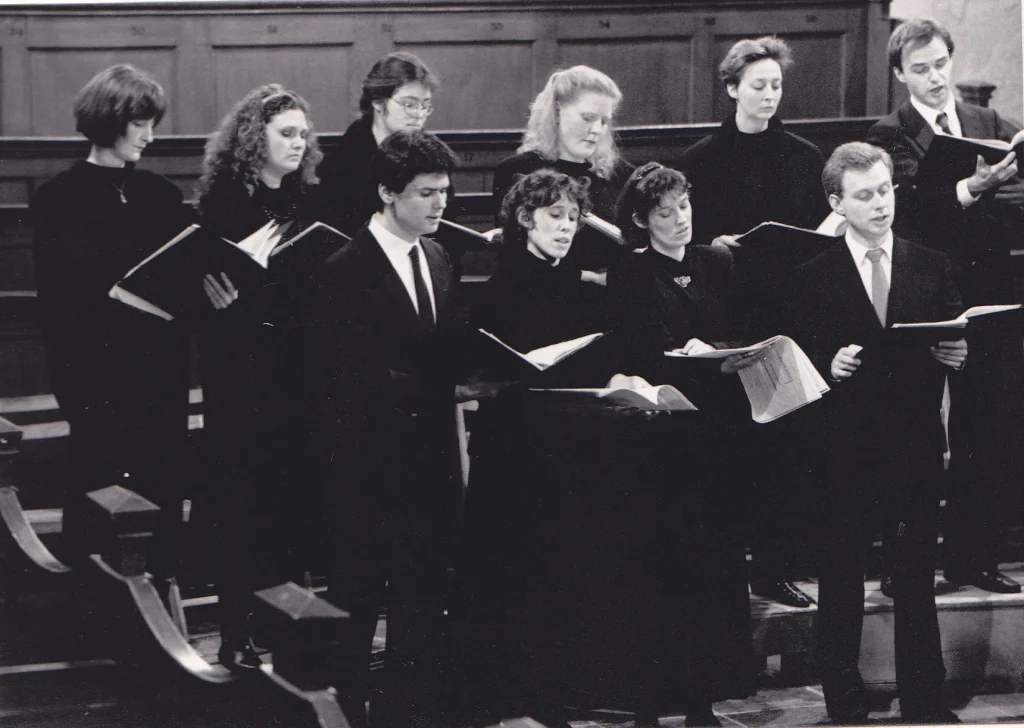
Arvo Pärt is a composer who elevated the power of silence into art. His music seems to breathe between the notes, as if each chord is a prayer. With his characteristic tintinnabuli style, he created a sound world that feels simultaneously simple and infinitely deep: a place where time seems to stand still for a moment. Those who listen to Pärt hear not only music, but a form of listening itself. At Cappella Amsterdam, we naturally know everything about this composer’s magnificent Canon of Repentance, the Kanon Pokajanen. But who is the composer behind this work?
Early years
Arvo Pärt was born on 11 September 1935 in the Estonian town of Paide and grew into one of the most influential composers of the late 20th and early 21st century. His musical journey began in the 1950s, when he studied composition under Heino Eller at the Tallinn Conservatory. During this period, Pärt experimented with a range of styles, from neoclassicism to serialism. Early works such as Partita (1958) and Perpetuum Mobile (1963) show how he sought his path within the artistic constraints of the Soviet Union — curious, radical, and always searching for his own voice.
Tintinnabuli
The 1970s marked a turning point. After a period of silence and intensive study of Gregorian chant and the polyphony of masters such as Josquin Desprez and Palestrina, Pärt found a new musical language: tintinnabuli. This style, inspired by the resonance of church bells, is characterised by hushed simplicity, sparse textures, and a clarity experienced as deeply spiritual.
The first work in this style, Für Alina (1976), marked a break from his earlier, more complex compositions. Just a few notes create a sense of timelessness and inner calm. Shortly after came Fratres (1977) and Spiegel im Spiegel (1978), both now iconic works performed around the world.
Major works and stylistic characteristics
Religious and spiritual inspiration runs as a thread through Pärt’s entire output. One of his most impressive examples is the Kanon Pokajanen (1997), a monumental canon of repentance set to ancient Slavonic texts from the Orthodox liturgy. In this restrained, almost ascetic music, Pärt seeks a direct connection between sound, silence, and prayer. Equally powerful are the monumental Passio (1982), his setting of the Gospel of John, and the sweeping Te Deum (1984–85), in which his tintinnabuli style achieves an almost heavenly clarity.
Other key works such as Tabula Rasa (1977), Magnificat (1989), and Stabat Mater (1985) again and again demonstrate his ability to achieve maximum emotional impact with minimal means. These are compositions that have moved generations of listeners and will continue to do so, with their unique combination of simplicity and depth.
Influence and legacy
Arvo Pärt’s influence on contemporary music is enormous. His radical simplicity and tintinnabuli style have inspired countless composers and musicians to listen afresh to silence and sound. Beyond the concert hall, his music is equally indispensable: filmmakers use his works to add weight and contemplation to scenes, as in the thriller There Will Be Blood and the tragicomedy La Grande Bellezza (The Great Beauty).
Pärt is often associated with neo-minimalism, but his music transcends any movement. His body of work is spiritual, emotional, and universal all at once. It is no surprise that he has received prestigious honours, including the Léonie Sonning Music Prize (2008) and the Polar Music Prize (2014).
After emigrating to Vienna in 1980, Pärt remained an important cultural touchstone, both internationally and in his native Estonia. Following the fall of the Soviet Union, he returned there, where he still lives and works today.
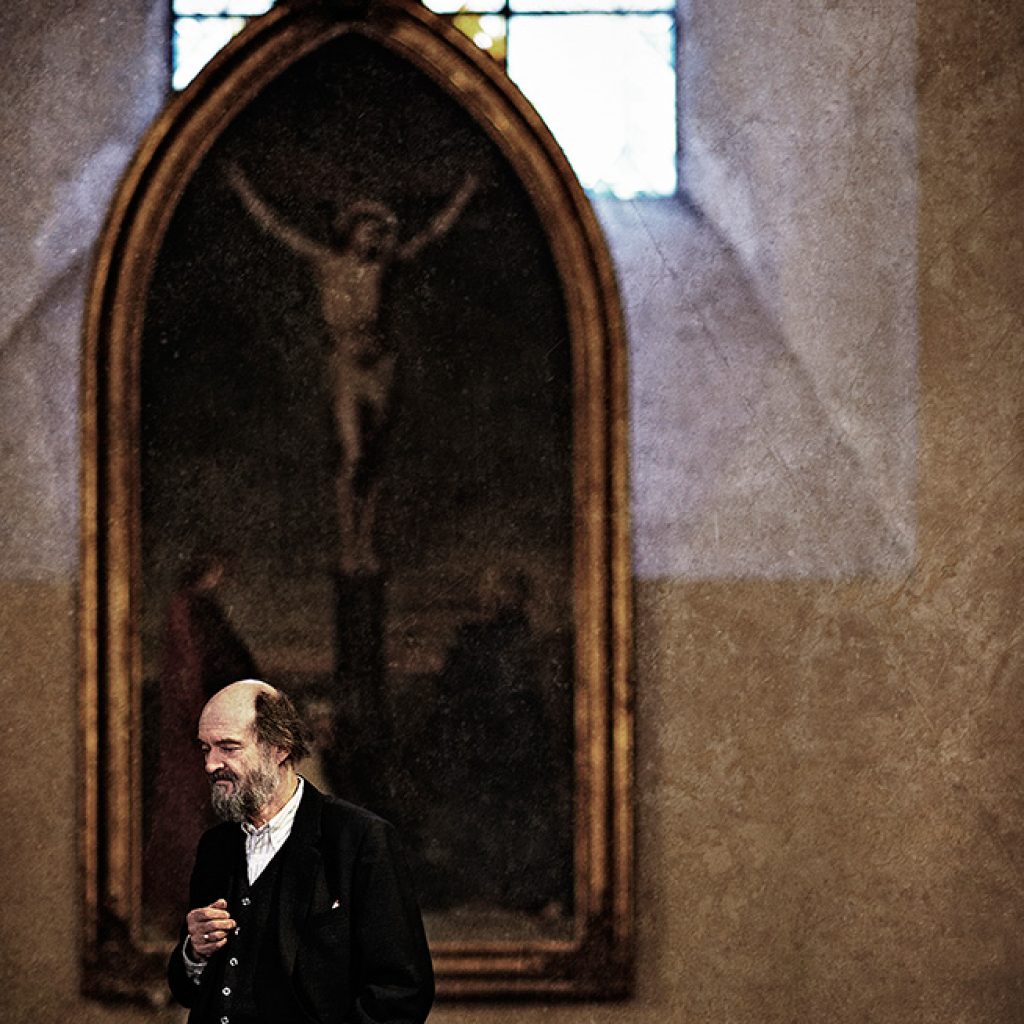
In an age when music so often revolves around speed and abundance, Arvo Pärt remains a rare voice of stillness. His work invites attentive listening — not only to the sounds, but to the silence that resonates between them. There, in that fragile balance, something timeless emerges: a space in which comfort, wonder, and belief in something greater come together. Perhaps that is what makes his music so irresistible — that it reminds us of what, in silence, we have always known.