background
Maurice Ravel (1875–1937) ranks among the most influential composers of the early twentieth century. His music is often associated with Impressionism, but a certain constructive clarity sets him apart from contemporaries such as Debussy. Ravel combined refined tone colours with strict formal control, always seeking a balance between tradition and innovation.
He composed the Pavane pour une infante défunte when he was just 24 years old. It would become one of his most beloved works — which, according to legend, caused Ravel himself considerable irritation over the years. He felt that he had written far better pieces than the Pavane.
And yet it is precisely in the apparent simplicity of the Pavane pour une infante défunte that a subtle refinement lies, one that is characteristic of Ravel’s early style. The work was originally written for solo piano in 1899 and later orchestrated by Ravel himself in 1910. In both versions the essence remains the same: a hushed, restrained melody that slowly unfolds above a gentle, stately accompaniment.
The title conjures the image of a deceased princess (and translates literally as “pavane for a dead princess”), but Ravel later emphasised that he had no actual dead child in mind. He stated that he simply loved the sound of the words. In his view, the piece should evoke a pavane that a little infanta might once have danced at the Spanish court — not a funeral march. That distinction is essential: the music is melancholic, but never heavy-hearted. It breathes a wistful elegance rather than deep grief.
The pavane was a slow court dance of the Renaissance, often characterised by dignity and restrained grace. With this form, Ravel reaches back to the past, but does so in a modern harmonic language. The harmonies are rich and at times surprising, with subtle dissonances and modal colorings that lend the music a floating, almost timeless quality. Here Ravel’s gift for breathing new life into historical forms without lapsing into nostalgia is plain to see.
Perhaps it is precisely this combination of simplicity, elegance, and subtle melancholy that has ensured the Pavane remains so beloved by audiences.
lyrics
Belle qui tiens ma vie
Captive dans tes yeux,
Qui m’as l’âme ravie
D’un sourire gracieux,
Viens tôt me secourir
Ou me faudra mourir.
Pourquoi fuis-tu mignarde
Si je suis près de toi,
Quand tes yeux je regarde
Je me perds dedans moi,
Car tes perfections
Changent mes actions.
Tes beautés et ta grâce
Et tes divins propos
Ont échauffé la glace
Qui me gelait les os,
Et ont rempli mon cœur
D’une amoureuse ardeur.
Mon âme soulait être
Libre de passions,
Mais Amour s’est fait maître
De mes affections,
Et a mis sous sa loi
Et mon cœur et ma foi.
Approche donc ma belle
Approche, toi mon bien,
Ne me sois plus rebelle
Puisque mon cœur est tien.
Pour mon mal apaiser,
Donne-moi un baiser.
Je meurs mon angelette,
Je meurs en te baisant.
Ta bouche tant doucette
Va mon bien ravissant.
À ce coup mes esprits
Sont tous d’amour épris.
Plutôt on verra l’onde
Contre mont reculer,
Et plutôt l’œil du monde
Cessera de brûler,
Que l’amour qui m’époint
Décroisse d’un seul point.
performers
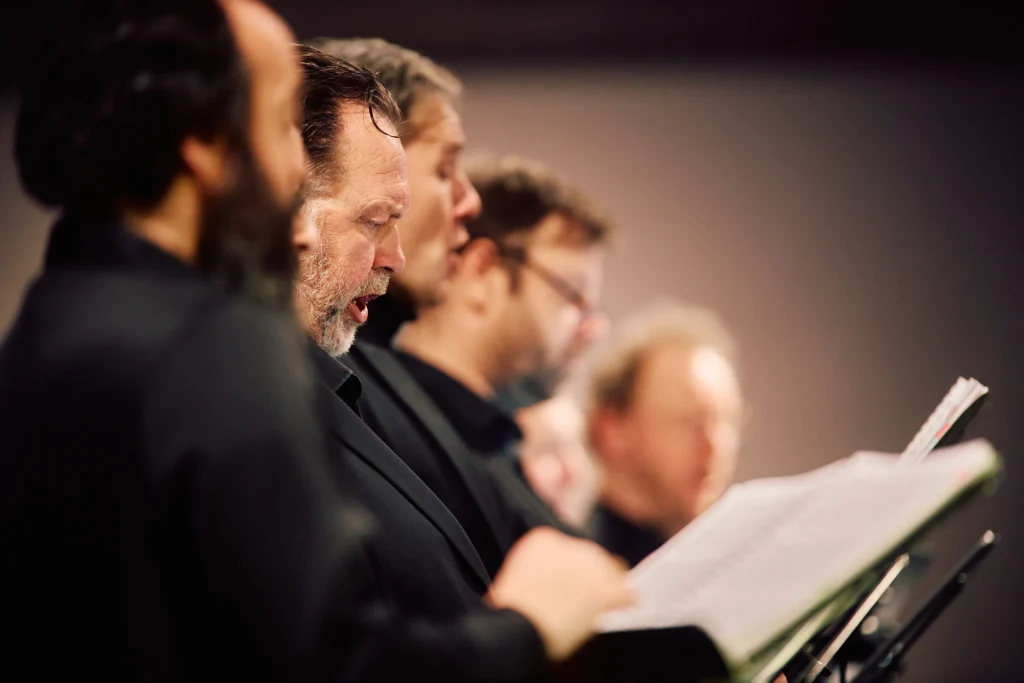
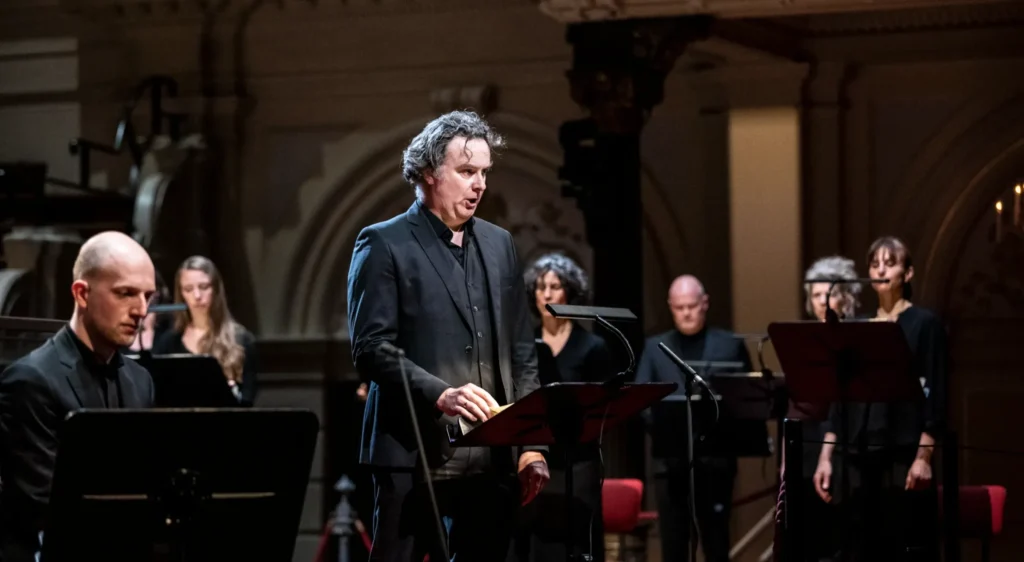
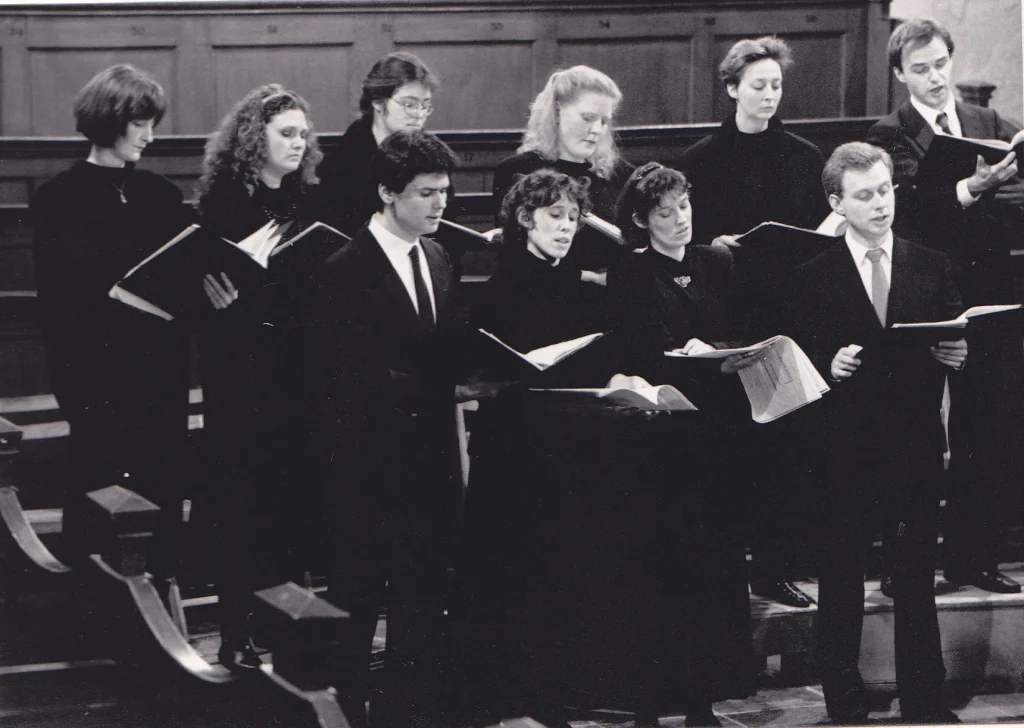
Cappella Amsterdam
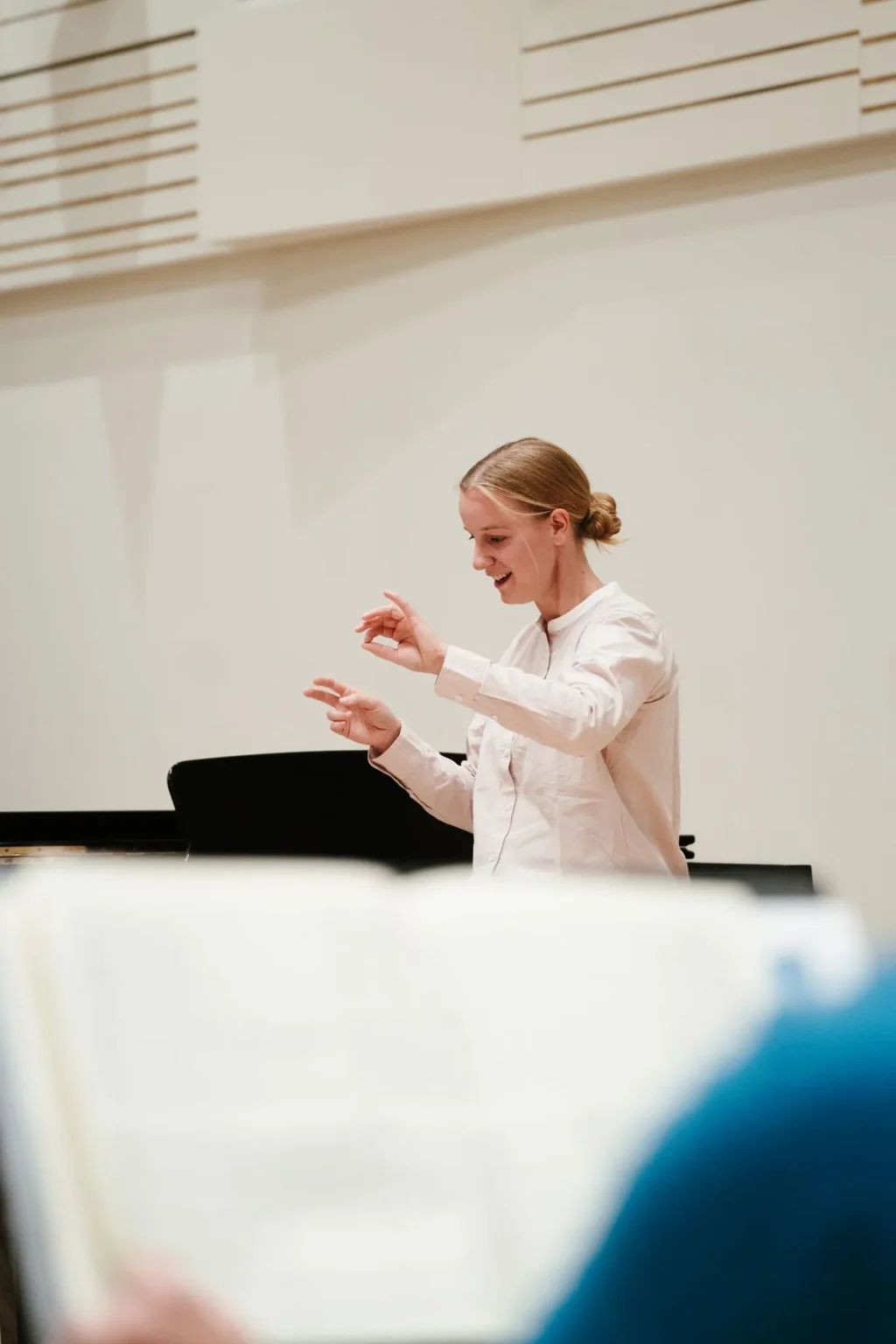
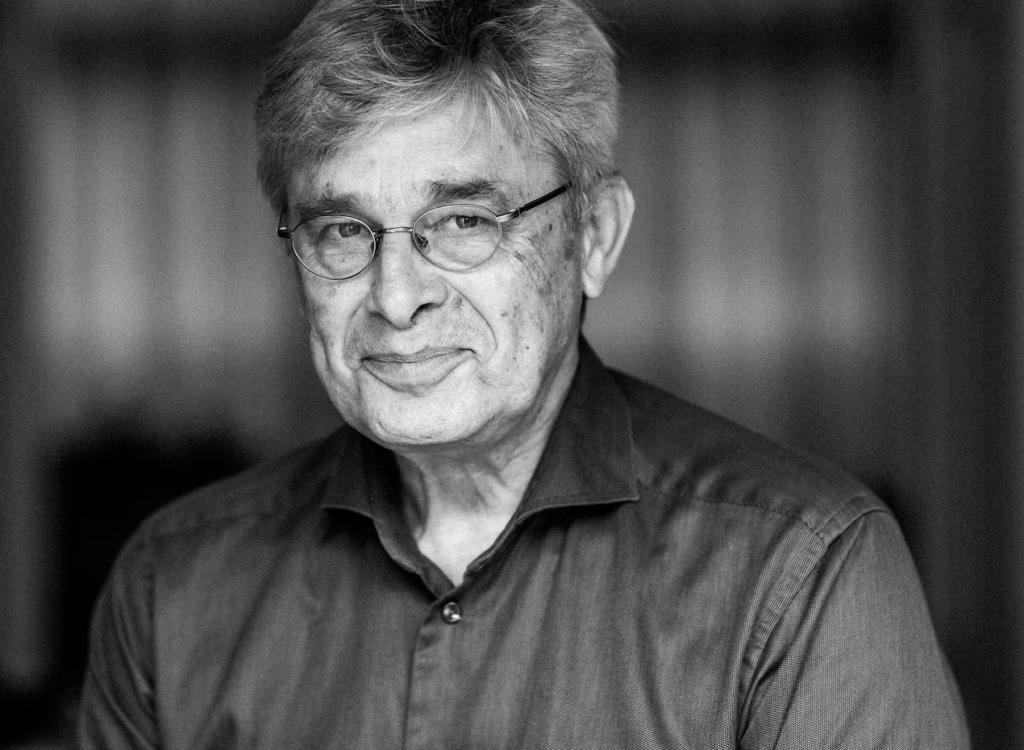
Daniel Reuss conductor