
programme
Orlandus Lassus (1532-1594)
Primus Psalmus Poenitentialis, LV 794
I. Domine ne in fuore tuo arguas me
II. Convertere Domine
III. Exaudivit Dominus deprecationem meam
IV. Gloria Patri, et Filio, et Spiritui Sancto
Secundus Psalmus Poenitentialis, LV 795
I. Beati quorum remissae sunt iniquitates
II. Quoniam tacui
III. Pro hac orabit ad te omnis sanctus
IV. Tu es refugiam meum
V. Gloria Patri, et Filio, et Spiritui Sancto
Alfred Schnittke (1934–1998)
Psalms of Repentance (Stikhi Pokayanniye)
I. Adam sat weeping at the gates of paradise
II. O wilderness, gather me
III. That is why I live in poverty
IV. My soul, my soul
V. O man, doomed and wretched
VI. When thy behed the ship that suddenly came
VII. Oh my soul, why are you not afraid
VIII. If you wish to overcome
IX. I have reflected on my life as a monk
X. Christian people, gather together!
XI. I entered this life of tears a naked infant
XII. (wordless)
This concert has an intermission.
performers
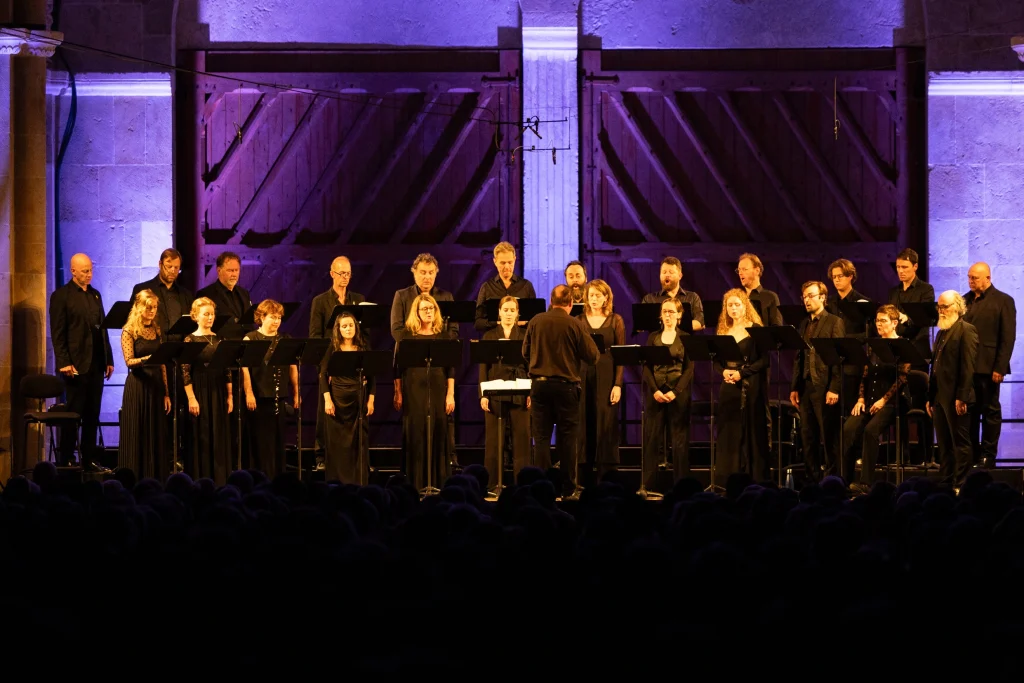
Cappella Amsterdam
Daniel Reuss conductor
background
Schnittke and Lassus brings together two approaches to penitence, separated by four centuries. In the first two penitential psalms of Orlandus Lassus, remorse unfolds as an orderly, liturgical process. The music closely follows the psalm texts, each ending with the Gloria Patri. Lassus’ polyphony is restrained and balanced, fostering concentration and stillness, inviting attentive listening without theatrical exaggeration.
In Alfred Schnittke’s Psalms of Repentance, the focus shifts to the individual’s inner struggle. The anonymous Russian penitential verses from the sixteenth century are set with striking expressivity, marked by sharp dissonances and abrupt contrasts. They draw the listener into another world. Here, penitence is experienced as an existential necessity: raw, confronting, and at times almost inescapable.
reviews
About the recording Lassus: Penitential Psalms
Cappella Amsterdam is different. It is a mixed choir of 15 voices which work together splendidly, even if Lassus rarely uses the different ranges to enhance the meaning of the text. The great challenge in these pieces is to keep a sense of direction. Lassus uses harmony to provide windows of colour rather than structure, and so his basses move around in a slightly angular manner. The lower voices negotiate these superbly as in psalm four verse one, where the bass voice anchors the harmonies precisely and with a rich resonance.
– BBC ★★★★★
In Leiden, Cappella Amsterdam performed Schnittke’s masterpiece with passion and exquisite tonal beauty. This music need not—or even should not—sound light and easy: it contains fiendishly difficult passages, challenging transitions, and daring leaps. It is robust and demanding, yet on Saturday it was gloriously mastered, triumphing over its technical obstacles.
– NRC ★★★★